
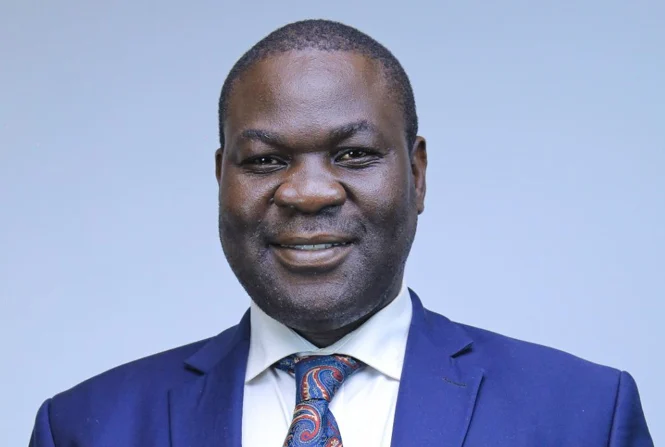
Lawyer Duncan Ojwang Oburu now faces the demanding task of leading the Independent Policing Oversight Authority (IPOA), after the National Assembly approved his nomination as chairperson of the civilian body tasked with overseeing the police.
Ojwang secured the approval after MPs adopted a report by the Departmental Committee on Administration and Internal Security, chaired by Narok West MP Gabriel Tongoyo, recommending him for the role.
The committee found that he satisfied all the qualifications required for the position, noting specifically that he meets the standard set for appointment as a judge of the High Court.
He steps into an institution facing mounting public doubt over whether it can genuinely deliver the accountability it was created to provide.
Ojwang takes over from Ahmed Issack Hassan, who stepped down from the chairmanship to take up an appointment as a judge of the Court of Appeal.
Hassan’s time at the helm of IPOA was defined by efforts to strengthen police accountability and rebuild public confidence in the institution, having been appointed to the role in December 2024 before resigning in February 2026.
In the interim period before a substantive replacement was confirmed, IPOA Vice Chairperson Anne Wanjiku Mwangi took over as acting leader while the recruitment process ran its course.
Ojwang’s path to the chairmanship began on July 21, 2026, when President William Ruto formally nominated him and forwarded his name to Parliament for consideration, in line with constitutional and statutory requirements.
He appeared before the vetting committee on August 12, where he laid out how he intended to run the authority. “I believe I am courageous. I speak truth. Trust me with that responsibility. We will speak truth to power,” he told MPs, describing IPOA’s core mandate as protecting citizens and ensuring police officers operate strictly within the Constitution and the law. “IPOA is the eye of Kenyans because Kenyans are the sovereign of this country,” he added.
On the question of IPOA’s relationship with the police service it oversees, Ojwang was careful to draw a distinction between cooperation and subordination, telling the committee that the authority must never take instructions from police command when carrying out its oversight work.
He argued that some of IPOA’s functions, particularly investigations, demand complete independence, while others, such as inspections and broader police reform work, call for a more cooperative relationship with the National Police Service.
He also voiced support for widening IPOA’s oversight mandate beyond the police to other armed state agencies, including the Kenya Wildlife Service and the Kenya Forest Service.
The nominee spoke, too, of a personal connection to the issue of police accountability, telling MPs his own family had experienced police wrongdoing first-hand. “I know what it takes when the police can be wrong. We have been hit as a family,” he said.
Before his nomination, Ojwang served as Dean of the School of Law at Africa Nazarene University, and has also taught law at both Africa Nazarene University and the University of Nairobi.
His nomination drew a public endorsement from constitutional law scholar Professor Makau Mutua, who described him as a distinguished legal scholar well suited to head the country’s premier policing oversight body.
Email your news TIPS to Editor@nairobilawmonthly.com, and to advertise with us, call +254715061658 anytime of the day
