

Kenyans have until Wednesday next week to submit sworn statements and supporting documents challenging the suitability of the seven nominees for chairperson and commissioners of the Independent Electoral and Boundaries Commission (IEBC), ahead of their vetting scheduled for 26 May.
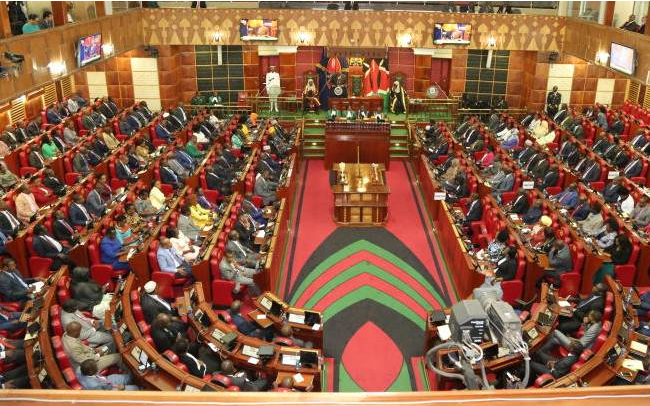
In a notice issued on Monday, National Assembly Clerk Samuel Njoroge announced that the Departmental Committee on Justice and Constitutional Affairs will conduct the approval hearings in accordance with Article 118(1)(b) of the Constitution and the Public Appointments (Parliamentary Approval) Act.

Members of the public are invited to present written affidavits contesting the qualifications or integrity of the nominees, supported by relevant documentation.
The seven nominees are Erastus Ethekon Edung (proposed chairperson), Ann Njeri Nderitu, Moses Alutalala Mukhwana, Mary Karen Sorobit, Hassan Noor Hassan, Francis Odhiambo Aduol, and Fahima Araphat Abdalla.
Their nomination has sparked mixed reactions. Former Deputy President Rigathi Gachagua, speaking in an interview with Egesa FM, criticised the final list, questioning the exclusion of Charles Nyachae, former chairperson of the Commission for the Implementation of the Constitution.
Gachagua claimed Nyachae had performed better during interviews and suggested that the President had been presented with two names but opted against him.
In contrast, the Supreme Council of Kenya Muslims (Supkem) endorsed the process, expressing full confidence in both the selection panel and the President’s appointees. National Chairman Alhajj Hassan Ole Naado defended the process as inclusive and consultative, noting that even those now criticising the outcome had representatives on the selection panel.
He condemned what he described as divisive political commentary and urged leaders to support the vetting process. Supkem further suggested future reforms to enhance transparency, recommending that the President merely ratify a single nominee selected by the panel, similar to the process followed by the Judicial Service Commission.
The vetting process comes amid rising concern over the prolonged vacancy in the IEBC, which has lacked a fully constituted commission since early 2023.
Email your news TIPS to Editor@nairobilawmonthly.com, and to advertise with us, call +254715061658 anytime of the day
