


A Senate committee has recommended rejecting a National Assembly amendment that would reinstate the university degree requirement for people seeking election as Members of Parliament and Members of County Assembly (MCAs).
On Tuesday, November 24, 2026, the Senate Standing Committee on Justice, Legal Affairs and Human Rights, chaired by Bomet Senator Hillary Sigei, recommended that the Senate reject the amendment. The amendment is part of the Election (Amendment) Bill, 2024, which seeks to streamline electoral processes ahead of the 2027 General Election.
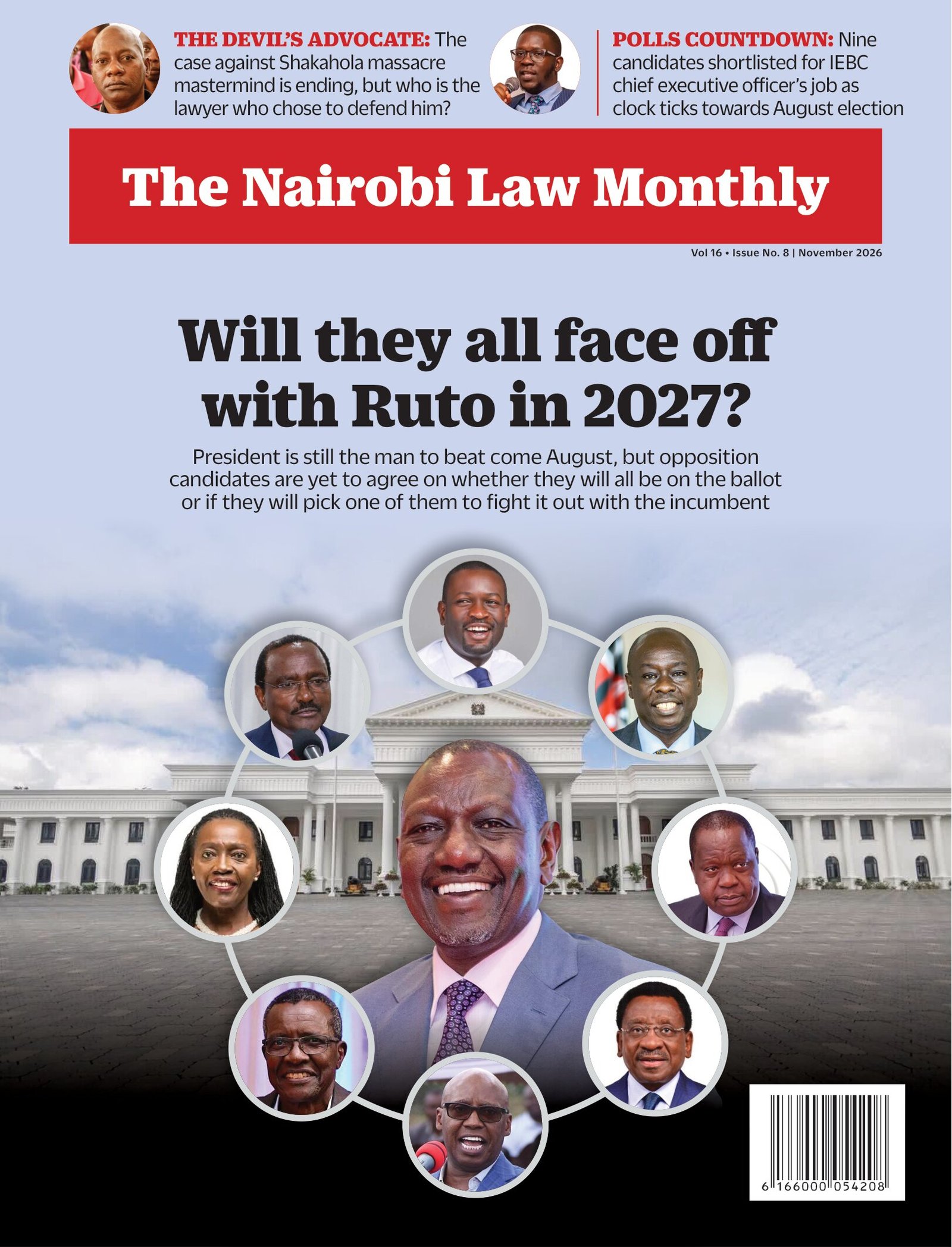
The Bill arose from the recommendations of the National Dialogue Committee (NADCO). It was published on May 7, 2024, and the Senate passed it on December 5, 2024, with a clause deleting the degree requirement in Section 22(1)(b) of the Elections Act. When the National Assembly approved the Bill on October 22, 2026, it reinstated the requirement.
In its report, the committee cited High Court rulings in 2021 and 2022 that declared the degree requirement unconstitutional. It said such a rule would “unjustifiably limit the political rights of all citizens”, contrary to Articles 38 and 27 of the Constitution. It also noted that comparable countries rarely impose academic qualification requirements on legislators.
The committee also opposed several other changes made by MPs. It rejected the deletion of clause 22, which would have allowed candidates, agents, observers and other authorised persons to record and document the tallying, announcement and declaration of results.
It said the National Assembly had given “no adequate justification” for removing the whole clause, given NADCO’s negotiated outcome and court rulings.
“Consequently, the committee resolved to recommend that the Senate reject the proposed deletion of clause 22 of the Bill,” the report said.
The committee further recommended rejecting the removal of the requirement for political parties to submit the names of candidates who participate in their primaries, together with the nomination dates, and requiring the IEBC to publish the information in the Kenya Gazette.
It warned that this could undermine the IEBC’s mandate under Article 88(4)(d) of the Constitution. It also recommended rejecting the deletion of the requirement that nominated MCAs be linked to the counties they seek to represent, citing court decisions that nominees must be registered voters and residents of those counties.
In total, the committee recommended accepting the National Assembly’s amendments to seven provisions and rejecting changes to 11 others.
Among the changes the committee supported was the removal of the requirement that Kenyan passports used for voter registration and voting be valid. It said insisting on validity “may lead to disenfranchisement of eligible voters during elections”.
It also backed a provision barring people who register as voters while registration is suspended for a by-election from contesting in the affected area, along with clearer rules on the symbols independent candidates may use.
The full Senate will now debate the report. If senators vote to reject the National Assembly’s amendments, the Bill will be referred to a mediation committee comprising members of both Houses under Article 113 of the Constitution.
The committee urged Parliament to fast-track the process, saying “the mediation process in respect of the Bill be fast-tracked with the target of securing approval” of the agreed version by both Houses by December 3, 2026.
Under the current law, only presidential and gubernatorial candidates must hold university degrees. The requirement for MPs and MCAs was postponed in 2013, 2017 and 2022, while IEBC Commissioner Dr Ann Nderitu has said it will not apply to MP and MCA candidates in 2027.
Email your news TIPS to Editor@nairobilawmonthly.com, and to advertise with us, call +254715061658 anytime of the day
