

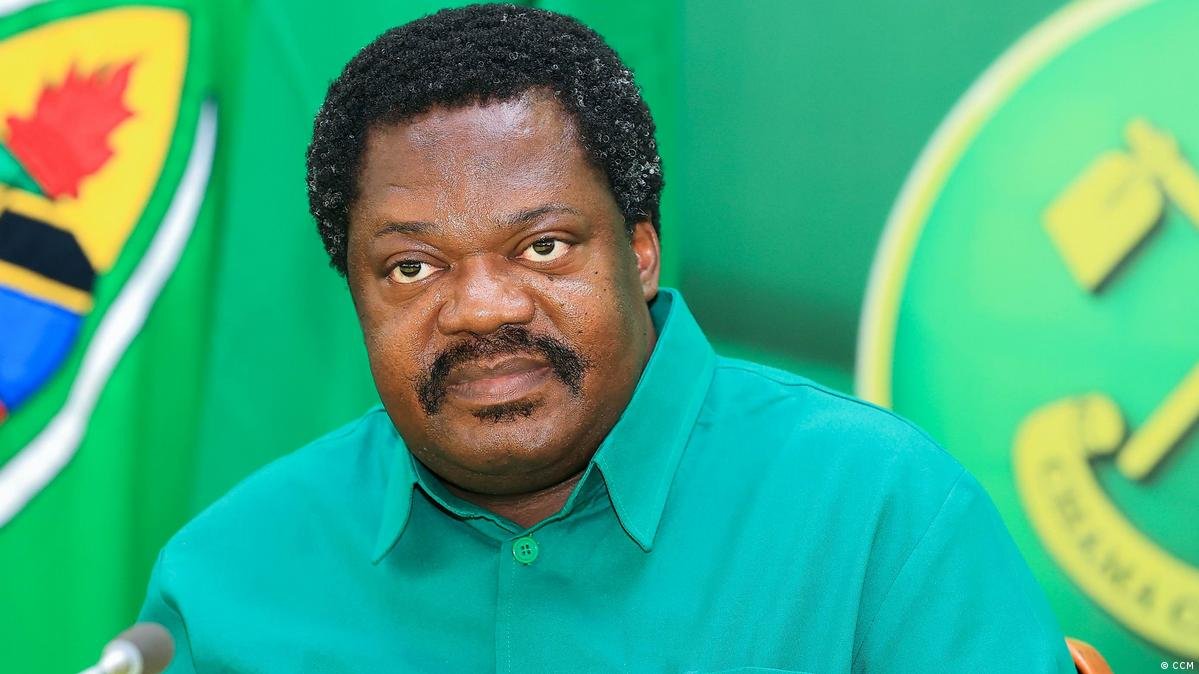
Tanzania’s Vice President, Ambassador Dr Emmanuel John Nchimbi, has announced his resignation from office and from politics altogether, less than a year after being sworn in, in a move that follows months of visible tension between him and President Samia Suluhu Hassan.
In a letter addressed to the President and dated August 25, Nchimbi said he had decided to step down from public life and would formally leave the vice presidency on September 4, 2026, citing Article 50(2)(c) read together with Article 149(2) of Tanzania’s Constitution as the legal basis for his departure.

He framed the decision as the fulfilment of a private promise he says he made to Samia when he was first appointed to the role.
“On 27 August 2025, I promised President Dr Samia Suluhu Hassan that I would support her and our country to the best of my ability and with loyalty. I also assured her that whenever she felt she needed a different Vice President, I would step aside from this position. I have satisfied myself, without doubt, that the President desires change, and I have therefore decided to honour my promise,” he wrote.
He went on to thank both the President and the ruling Chama Cha Mapinduzi (CCM) party for the trust placed in him, and thanked Tanzanians more broadly for their support during his time in public service, pledging to “continue to be a good citizen of Tanzania.”
Nchimbi’s departure brings an unusually short vice presidency to a close. He was sworn in on November 3, 2025, after being selected by Samia as her running mate for the 2025 general election, a decision announced during a CCM Special National Congress in January of that year, when he replaced Dr Philip Mpango, who had stepped down citing health reasons.
Nchimbi, a career diplomat and politician who has previously served as Tanzania’s ambassador to Egypt and Brazil, as well as Minister of Home Affairs under former President Jakaya Kikwete, had also served as CCM’s Secretary General before his elevation to the vice presidency.
His resignation follows a period of reported friction within the top ranks of the ruling party. According to regional reporting, Nchimbi’s backing had been considered critical to securing Samia’s path to a second presidential term, but that support was said to have come with expectations attached, including guarantees around his own political future, tensions that reportedly deepened following unrest linked to post-election killings, and which at one point raised the possibility of impeachment proceedings against him.
The circumstances surrounding the resignation have also drawn scrutiny closer to home. Just days before Nchimbi’s letter was made public, Tanzania’s Information Services Department, commonly known as Maelezo, suspended the publishing licence of the newspaper MwanaHALISI for six months.
The regulator’s action followed a story the paper had run under the headline “Nchimbi agoma kujiuzulu”, loosely translated as “Nchimbi rejects calls to resign”, which Maelezo said breached professional standards on accuracy, balance and verification, along with licensing conditions under the Media Services Act, 2016.
The suspension took effect on August 19, less than a week before Nchimbi’s own resignation letter directly contradicted the substance of the story that had triggered it.
Nchimbi becomes the sixth person to hold Tanzania’s vice presidency since the position was created in 1964, and one of its shortest-serving occupants, having spent roughly ten months in the role before stepping down.
Email your news TIPS to Editor@nairobilawmonthly.com, and to advertise with us, call +254715061658 anytime of the day
