

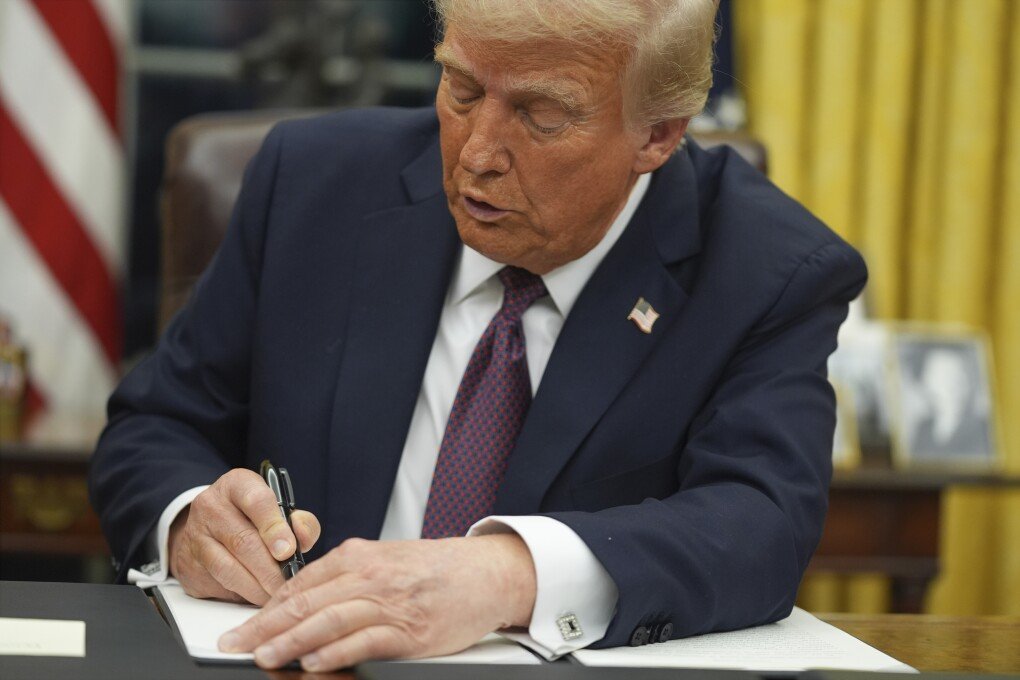
Kenyan exporters have secured two more years of duty-free access to the United States market, after President Donald Trump signed into law an extension of the African Growth and Opportunity Act (AGOA) through December 31, 2028.
Trump signed the extension on Friday, September 4, bringing relief to Kenyan manufacturers and exporters who had faced months of uncertainty over the future of the trade arrangement.
The Kenyan government welcomed the move, saying it provides much-needed certainty for exporters and the thousands of workers whose jobs depend on preferential access to the US market.
Investment, Trade and Industry Cabinet Secretary Lee Kinyanjui said the extension carries particular weight for Kenya’s textile and apparel sector, which supports more than 66,000 direct jobs nationally.
“The decision by U.S. President Donald Trump to sign into law the extension of the African Growth and Opportunity Act (AGOA) through December 31, 2028, is highly welcome,” Kinyanjui said, adding that the extension should be viewed as more than simply a continuation of existing trade preferences.
“AGOA should therefore serve as a catalyst for Kenya’s industrialisation, value addition, investment and job creation,” he said. “This is a significant development for Kenya and provides much-needed certainty for exporters, manufacturers and investors who rely on preferential access to the United States market.”
AGOA has underpinned US-Africa trade since 2000, granting eligible sub-Saharan African countries duty-free access to the world’s largest economy.
The programme had originally lapsed in September 2025, prompting Trump to sign a temporary one-year extension while a longer-term arrangement was negotiated, a process that stalled for a period amid a US Congress shutdown before eventually resuming.
This latest extension retains all of the programme’s existing provisions, including the third-country fabric rule, a provision that allows African garment manufacturers to use imported fabric while still qualifying for duty-free access, a rule considered especially important for Kenya’s apparel industry given the country’s continued reliance on imported textile inputs.
The extension arrives amid separate friction in the wider US-Kenya trade relationship. Since April 9, Kenyan goods have faced a 10 per cent US tariff, part of a broader set of reciprocal tariffs the Trump administration imposed on numerous countries, citing trade imbalances and barriers facing American firms.
The AGOA extension does not affect that separate tariff, but does preserve Kenya’s underlying preferential access for goods falling under the programme. The renewal also comes despite earlier pressure from some US lawmakers to exclude South Africa from AGOA altogether, a push that, had it succeeded, could have complicated the regional negotiations behind the wider extension.
The Kenya Private Sector Alliance (KEPSA) also welcomed the extension, crediting months of sustained advocacy work by the private sector, government and regional partners for helping secure it, and noting that the renewal protects an estimated Sh60 billion in apparel exports alongside the roughly 66,800 jobs tied to the sector.
Even so, KEPSA cautioned that the extension should not be treated as a long-term solution, warning that pressure is already building toward securing a more permanent trade arrangement between Kenya and the US before the current window closes.
The extension buys Kenyan manufacturers and policymakers valuable time. The government has signalled that it intends to use the period through to 2028 to diversify the country’s export base beyond garments, deepen investment in manufacturing, and strengthen Kenya’s position in the US market ahead of whatever trade framework eventually succeeds the current AGOA arrangement.
Email your news TIPS to Editor@nairobilawmonthly.com, and to advertise with us, call +254715061658 anytime of the day
