

By Bernard Mwinzi
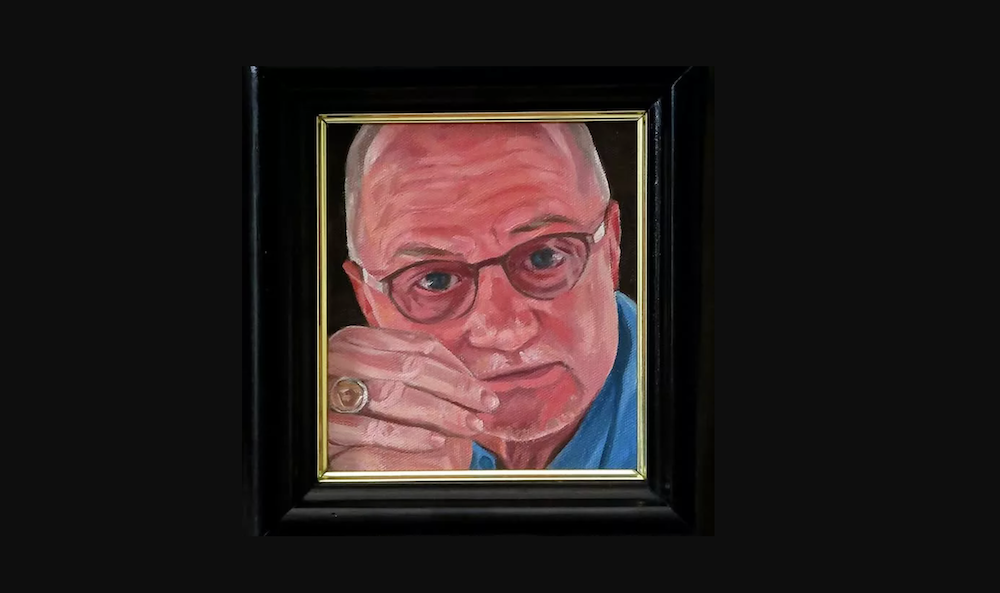
Frank Whalley, the eccentric editor who took no hostages and painted newsrooms with the broad brush of bluster, died at his Spring Valley home in Nairobi on Monday, August 31, 2026 and was cremated a few hours later.
Whalley was a man who divided opinion in the newsrooms he touched, and belonged to an era that defined, for better, Kenya’s journalism.
I first met Whalley when he was the Training Editor at the Nation Media Group, and quickly confused him with Ian Beales, another British editor who, years earlier, had sat on the interviewing panel with then Managing Editor Mutuma Mathiu and then Editorial Director Wangethi Mwangi that gave me a job at the Nation.
Whalley and I interacted on many occasions, and each time I could hear the haste in his voice and smell the impatience of a man whose mind appeared to run several sentences ahead of his mouth. There was also a particular way he talked.
I want to say it was brisk, unsentimental, and faintly dangerous, but perhaps what I should say instead is that it suggested that this was a man who had little time for fools and even less interest in pretending otherwise.
And, indeed, he suffered no fools. Many editors could not stand him. In later years, some of them would regale us with stories of their encounters with Whalley, recounting their run-ins with the same mixture of irritation and reluctant admiration reserved for people who had, somehow, managed to get under your skin and remain there.
Whalley belonged to a breed of journalists that is becoming harder to find: Rough around the edges, allergic to ceremony, capable of telling you exactly what he thought to your face and, if necessary, advising you to “go cry over there”.
He and his kind were forged in a different era of journalism that was competitive, disciplined, unforgiving, and occasionally brutal. In those newsrooms, survival demanded instinct, nerve and that mysterious alchemy of journalism that I like to call “the ability to make words not merely inform, but sing”.
These were journalists who had spent years fighting off the wolves, both in the newsroom and beyond it. Inevitably, some emerged a little battered, a little eccentric, occasionally incomprehensible and gloriously unconcerned with being liked. And Whalley was the personification of that breed.
I last heard of him at the height of the Covid-19 pandemic, when a close friend told me he had fallen ill. By then, he was running an art gallery in Nairobi and, every so often, throwing an article into the Nation stable. Then he disappeared from view, swallowed, like so much else, by the great fog of the pandemic and the strange, shivering aftermath it left in its wake.
Perhaps that is one of journalism’s cruelties. Its giants rarely leave monuments behind. Think about it. Think about the greats who have fallen along the way in recent times. All we have from them are the habits, phrases, instincts, and arguments that they taught us. Not to whine, but to lose a man of Whalley’s stature and experience is to lose a piece of the institutional memory of a trade that has already forgotten too much of its own history.
He was not the last of a dying breed, but he was one of its memorable specimens who stood tall among those difficult, gifted, maddening, magnificent characters like Wangethi, Joseph Odindo, Mutuma, Pamela Sittoni, Rhoda Orengo, and Tom Mshindi, who helped shape the journalism that came to define the Nation.
He had his foibles and faults like everyone else. He sure could be abrasive, impatient and impossible. But journalism was never meant to be a personality contest, and what I have come to realise now, as age catches up with me, is that sometimes the people who leave the deepest mark are the ones who refuse to smooth their edges for your convenience.
Rest well, Champ.
Email your news TIPS to Editor@nairobilawmonthly.com, and to advertise with us, call +254715061658 anytime of the day
