

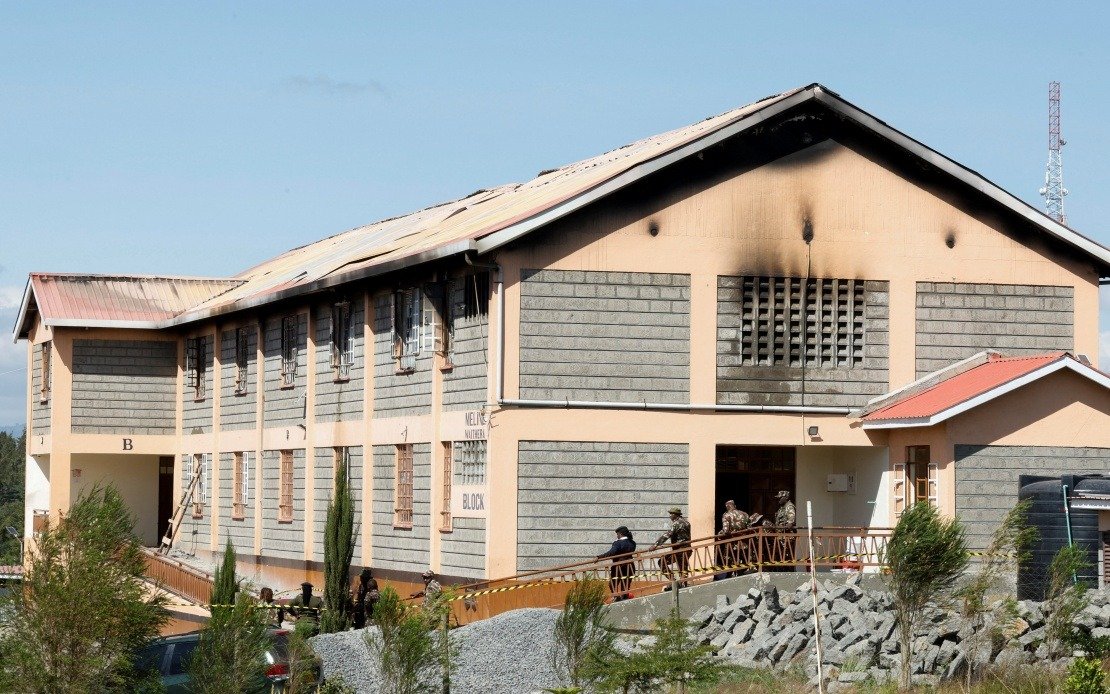
A wave of unrest has disrupted learning in about 100 schools across Kenya in the early weeks of Term Two, forcing several institutions to send students home as authorities grapple with rising cases of strikes, arson, and vandalism.
The affected schools are spread across Nairobi, Kiambu, Nakuru, Central, Eastern, Western and Nyanza regions, pointing to a widespread and fast-moving trend that has unsettled the education sector at a critical point in the academic calendar.

Among the institutions reported to have been affected are Lenana School, Loreto High School Limuru, Buruburu Girls High School, Nakuru Girls High School, Naivasha Girls High School, Chavakali High School, Alliance High School, Utumishi Girls Academy, and several others across the country.
The most severe incident occurred at Utumishi Girls Academy in Gilgil, where a dormitory fire on 27 May 2026 killed 16 students and left 79 others injured. Investigators say the incident is part of a wider pattern of unrest, with suspects allegedly citing grievances linked to changes in the examination timetable, school contributions for activities, and peer influence from strikes in other institutions. Nine suspects have since been remanded for 21 days as investigations continue.
At Alliance High School, a dormitory fire was reported on 4 June 2026 at around 3am, with authorities detaining 21 students for questioning over a suspected planned strike linked to the incident.
While the causes differ from school to school, education stakeholders say the repeated occurrences suggest a broader breakdown in discipline, communication and student welfare systems within some institutions.
Political leaders and education stakeholders have expressed concern over the unfolding situation.
Suba North MP Millie Odhiambo said there is a need for collective responsibility in addressing the crisis.
“Blaming the Education Cabinet Secretary, the Interior Cabinet Secretary or the government is not the solution. Everyone must come together to address this problem,” she said, adding that parents also have a key role in guiding learners.
Embu Senator Alexander Mundigi warned that continued disruption could affect academic performance, particularly for candidates preparing for national examinations.
“A stable and uninterrupted learning environment is essential for effective implementation of the school curriculum, especially during the second term when candidates and other learners are preparing for their final examinations,” he said.
- Police arrest 10 Alliance High students over dormitory fire probe
- Court detains nine Utumishi Girls’ students over deadly fire
- Utumishi Girls fire: Suspects reveal motive in dorm arson that killed 16
Kericho Governor Eric Mutai announced that all boarding schools in the county will undergo safety compliance assessments within ten days, as part of efforts to strengthen safety standards and prevent further incidents.
He added that stakeholders had agreed on a multi-agency approach involving security agencies, county officials, the Ministry of Education and school administrators to address emerging challenges affecting learners.
The Ministry of Education has issued directives aimed at curbing unrest, including increased security patrols during evening study periods, installation of CCTV systems, tighter monitoring of student movement, and screening of learners returning from trips or home visits.
Schools have also been advised to strengthen guidance and counselling services, adopt more consultative leadership styles, and address student grievances early to prevent escalation.
Education experts and stakeholders have linked the unrest to a combination of factors, including academic pressure, communication gaps between learners and administrators, disciplinary challenges, and emerging mental health concerns among students.
Parents have also raised concerns about strained relationships between students and school management, while acknowledging the need for discipline and protection of school property. Some have called for stronger counselling systems and improved dialogue within schools.
Others, including teachers’ representatives, have pointed to declining discipline in some institutions and urged stronger collaboration between parents, schools and government agencies.
Meanwhile, as investigations continue and more schools are affected, attention is increasingly turning to how institutions can restore stability while addressing underlying tensions before they escalate into further disruption.
Email your news TIPS to Editor@nairobilawmonthly.com, and to advertise with us, call +254715061658 anytime of the day
