

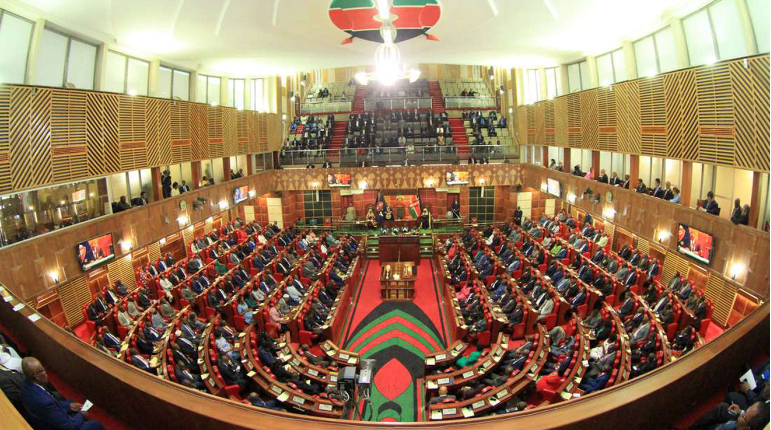
Kenya’s National Assembly Education Committee is considering proposals to review the long-standing ban on corporal punishment, including the use of canes, amid growing concerns over indiscipline among students, attacks on teachers and rising incidents of violence in learning institutions.
Committee Chairman Julius Melly, the Member of Parliament for Tinderet, confirmed that the panel has received formal submissions seeking a re-examination of legal provisions that outlaw physical discipline.

The Kenya Union of Post Primary Education Teachers (KUPPET) has been among the strongest advocates for the change, arguing that current laws leave teachers powerless in the face of increasingly aggressive learner behaviour.
“Why are we punishing the teacher for corporal punishment and everyone is quiet about the student?” Melly asked, highlighting what he described as an imbalance that leaves educators vulnerable while failing to adequately address violence against them.
The debate follows several incidents of violence in schools. In early November, students at Nyabisase Secondary School in Kisii County’s Bobasi reportedly attacked Kenya National Examinations Council officials and police officers.
Learners allegedly seized a police officer’s pistol and held it for nearly three hours. Several officials and police officers were injured.
Another incident cited in the debate is the dormitory fire at Utumishi Girls Academy on May 28 this year, which claimed 16 lives and left 79 students injured.
Corporal punishment was banned in Kenyan schools in 2001. The ban was further reinforced through the Basic Education Act of 2013, the Children Act and constitutional protections.
- Court detains nine Utumishi Girls’ students over deadly fire
- Utumishi Girls fire: Suspects reveal motive in dorm arson that killed 16
Kenya is also a signatory to the United Nations Convention on the Rights of the Child, which obligates the Government to protect children from all forms of violence, including mental violence.
These legal provisions prohibit corporal punishment and require teachers to ensure that discipline in schools is administered with dignity and respect for learners’ rights. Violations can attract fines of up to Sh100,000 or imprisonment for up to six months.
Clause 19 of the proposed Basic Education Bill 2026 protects learners from corporal punishment, torture and cruel treatment. Melly and other proponents of the review argue that there is insufficient clarity on the disciplinary measures schools can take when learners commit serious offences.
The Principal Secretary for Basic Education, John Ololtuaa, told the committee that detailed guidelines would be developed by the Cabinet Secretary for Education. The guidelines are expected to outline permissible disciplinary measures, including suspensions.
The debate forms part of wider consultations on various education reform bills. Some parents, former teachers and legislators have called for the reintroduction of some form of physical punishment to restore order in schools.
However, children’s rights activists and sections of civil society warn that bringing back the cane would reverse progress in protecting learners and could expose children to abuse.
No decision has been made to reinstate corporal punishment in Kenyan schools. The committee is expected to consider the submissions and competing views as part of its ongoing deliberations.
– By John Murunga
Email your news TIPS to Editor@nairobilawmonthly.com, and to advertise with us, call +254715061658 anytime of the day
