

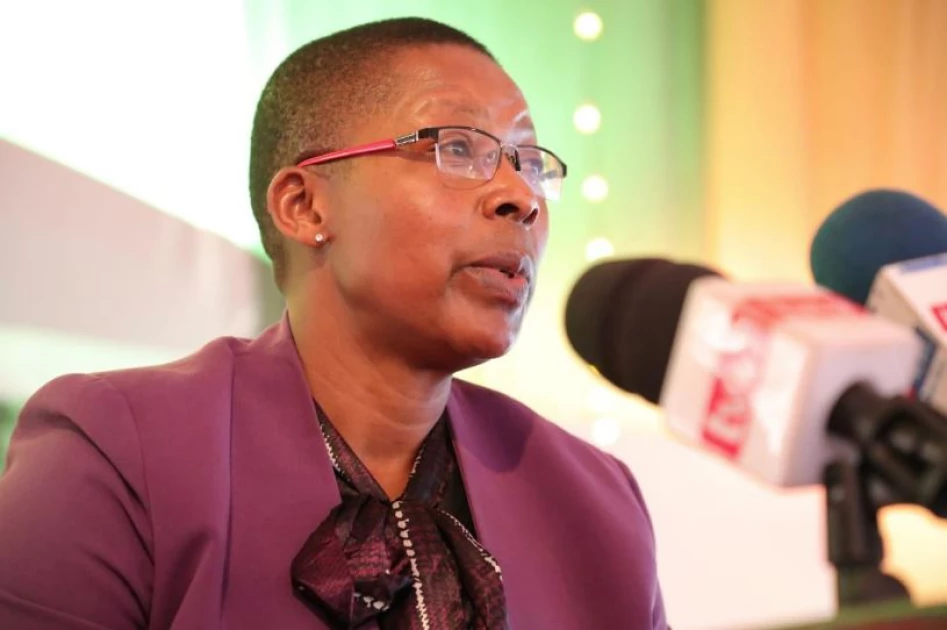
The Supreme Court has deferred a ruling on whether impeached State officers can seek elective office while challenging their removal in court, directing Attorney-General Dorcas Oduor to give legal advice within 21 days.
The matter raises a politically sensitive issue ahead of the 2027 General Election. The ruling could have a significant impact on former Deputy President Rigathi Gachagua, who has remained active in politics after losing office through impeachment.

It also touches on the political futures of former Meru Governor Kawira Mwangaza and former Nairobi Governor Mike Sonko, who both lost office through removal processes.
At the centre of the dispute is whether leaders removed through impeachment should be allowed to contest elections before their legal battles over those removals are concluded.
Gachagua was impeached by the National Assembly in 2024 and is still challenging the legality of his removal at the Court of Appeal. He has since positioned himself as a key opposition figure seeking to challenge President William Ruto in the 2027 presidential contest.
Mwangaza was removed as Meru governor in August 2024 after the Senate upheld her impeachment, while Sonko lost the Nairobi governorship in 2020 and has continued pursuing legal challenges related to his exit from office.
The three have since established political platforms of their own. Gachagua leads the Democracy for the Citizens Party (DCP), Mwangaza heads the Umoja na Maendeleo Party (UMP), and Sonko leads the National Economic Development Party (NEDP).
The advisory opinion request was filed by Meru County Assembly Speaker Ayub Bundi Solomon, who asked the Supreme Court to interpret Chapter Six of the Constitution alongside Articles 99 and 193, which outline integrity requirements and qualifications for elective positions.
“This is a non-adversarial reference for an advisory opinion. The reference arises from the unresolved uncertainty at the heart of the leadership and integrity framework under Chapter Six of the Constitution,” Bundi said.
- Gachagua launches fresh legal fight over impeachment ruling
- Why the High Court faulted Senate in Gachagua impeachment case
- Gachagua impeachment was a parliamentary coup, court told
He argued that court orders suspending removals during appeals had created uncertainty by allowing leaders removed through impeachment to remain eligible to contest elections.
Fifteen years after the 2010 Constitution came into force, Bundi said there was still no definitive interpretation of whether the law creates a clear standard for public leadership, particularly for individuals removed from office for violating Chapter Six through processes such as impeachment.
The five-judge bench, led by Deputy Chief Justice Philomena Mwilu, did not address that constitutional question. Instead, it ruled that the Attorney-General’s advice had to be obtained before the case could proceed.
“The applicant is directed to seek the Hon. Attorney-General’s advice, and such advice is to be given within 21 days from the date of this ruling,” the court ordered.
The judges dismissed Bundi’s argument that the advice was unnecessary, saying Supreme Court rules require it before such a reference is filed.
“Rule 53 of the Supreme Court Rules 2020, together with the list of authorities cited by the applicant, clearly set out the requirement to seek the Attorney-General’s advice before filing a Reference,” the court said.
The bench noted that the advice could potentially resolve the issue without requiring further court proceedings, saving judicial time.
The matter will return for mention on August 10, 2026.
Email your news TIPS to Editor@nairobilawmonthly.com, and to advertise with us, call +254715061658 anytime of the day
