

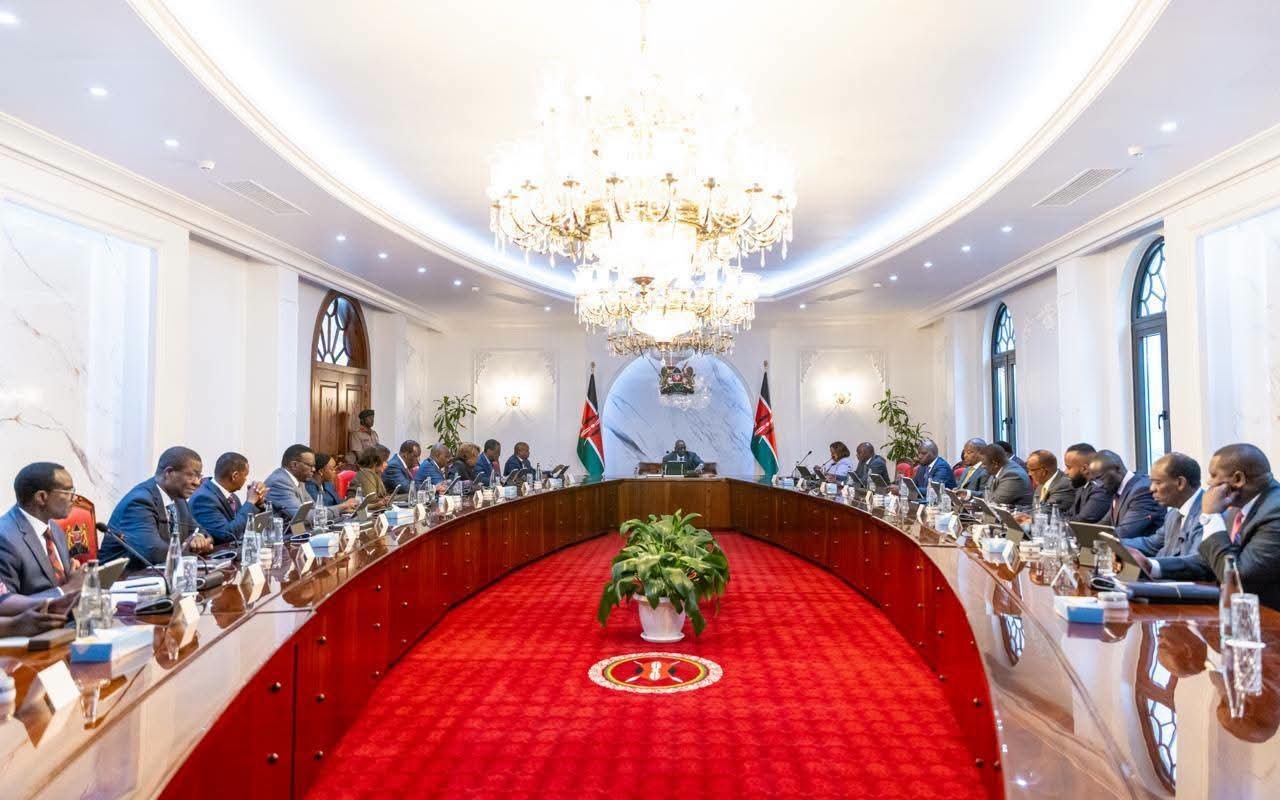
President William Ruto is facing mounting pressure to reconsider the composition of his Cabinet following the United Democratic Alliance (UDA)’s heavy defeat in the Ol Kalou parliamentary by-election, with political observers suggesting the result could reshape his strategy ahead of the 2027 General Election.
The by-election outcome has intensified debate over whether the President should reduce the number of Cabinet Secretaries from the Mount Kenya region and strengthen alliances in Western Kenya and the Luo Nyanza region, where leaders have signalled support in exchange for greater government representation and development projects.
UDA candidate Samuel Muchina Nyagah garnered 5,450 votes, losing by a wide margin to Democracy for the Citizens Party (DCP) candidate Sammy Douglas Kamau Waweru, who secured 35,440 votes despite an intensive government-backed campaign.
Addressing the political climate, President Ruto called for national unity beyond the electoral contest.
“There will be Kenya after the election, and we must live together as brothers and sisters of one nation. Once an election is over, we must remember that this country belongs to all of us. All leaders will be judged based on their development record rather than campaign promises,” Ruto said.
The President currently has several senior Cabinet members from the Mount Kenya region, including Cabinet Secretaries Alice Wahome, Mutahi Kagwe, William Kabogo, Lee Kinyanjui, Rebecca Miano, Geoffrey Ruku and Eric Muuga, alongside Secretary to the Cabinet Mercy Wanjau. Many of them actively campaigned for the UDA candidate during the Ol Kalou by-election.
Following the loss, DCP leader Rigathi Gachagua accused the government of deploying state resources in an unsuccessful attempt to influence the outcome.
“The government deployed development projects worth Sh14 billion and distributed Sh1.1 billion in cash during the campaign period, alongside donations of household items and equipment, in an effort to sway voters, but the residents of Ol Kalou were not influenced at all,” Gachagua said.
The defeat has also prompted fresh calls from some leaders for President Ruto to reconsider his running mate ahead of the next General Election.
Bungoma Governor Kenneth Lusaka urged the President to consider selecting a deputy from Western Kenya, arguing that support from Mount Kenya was diminishing.
“The President should consider giving Western Kenya the deputy president’s slot since it is clear that the Mount Kenya region is unlikely to reciprocate his development agenda. The many development projects underway will further consolidate support for his re-election,” he said.
Some leaders allied to ODM have similarly proposed that either Co-operatives Cabinet Secretary Wycliffe Oparanya or Homa Bay Governor Gladys Wanga could help strengthen support in Western Kenya and the Luo Nyanza region respectively.
Political analyst Mutahi Ngunyi argued that the Ol Kalou outcome demonstrated that President Ruto’s support in Mount Kenya had weakened.
“Dear Ruto. No point courting Kikuyus. You have tried. They have rejected you. Ol Kalou is the testament. Turn to the Luo Nation and the Mulembe Nation. Ol Kalou is a pain point for you. Or was it an experiment to justify discarding Kikuyus? Nine Kikuyu ministers? Fire them,” Ngunyi said.
Senior Counsel Ahmednasir Abdullahi also weighed in, saying the President’s choice of running mate could significantly influence his re-election prospects.
“Stick with Prof Kithure Kindiki and believe the false narrative that you will get 40 per cent of the Mount Kenya vote and know that a humiliating defeat is certain. Or act like the political fox you always have been, pick a Luo or a Luhya running mate (preferably the latter), and hit the road running,” Abdullahi said.
The Ol Kalou by-election has now emerged as an early indicator of shifting political dynamics, with attention turning to how President Ruto will respond as political realignments gather pace ahead of the 2027 polls.
Email your news TIPS to Editor@nairobilawmonthly.com, and to advertise with us, call +254715061658 anytime of the day
