

Kenya has started a mandatory 42-day countdown towards being declared free of Ebola virus disease (EVD) caused by the Bundibugyo virus after discharging its last patient and releasing the final contacts from monitoring.
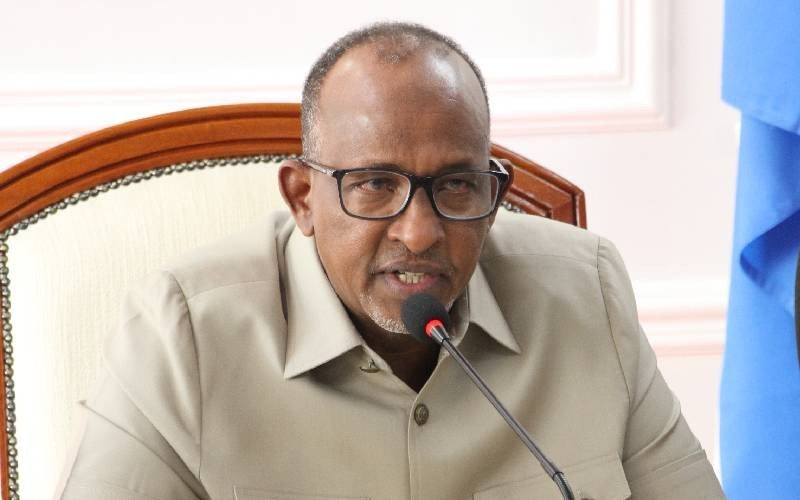
Health Cabinet Secretary Aden Duale confirmed that the last person receiving treatment for the disease had recovered and was discharged, while the remaining 11 contacts completed their 21-day observation period without developing symptoms and returned home. For the first time since the outbreak began, Kenya has no patients under treatment and no contacts in quarantine.

“Today, the last patient under treatment for Ebola Bundibugyo Virus Disease in Kenya has been discharged, healthy and free of the virus. This means Kenya has no patient on treatment and no contact on quarantine for the first time since the outbreak began,” Duale said.
The 42-day period, which is twice the maximum incubation period of the virus, begins on November 12. If no new cases are recorded, Kenya is expected to be declared free of the disease on or about December 23, 2026.
Kenya reported its first case on October 6, 2026. A Kenyan national contracted the disease after travelling from the Democratic Republic of the Congo (DRC), through Uganda, and arriving in Nairobi on October 3. The patient died on October 5.
A total of nine confirmed cases and two deaths were reported. The eight secondary cases were all linked to one cluster, with each resulting from transmission by the index patient. Four were family members, while the other four were healthcare workers who had cared for the index patient.
All eight developed symptoms while in quarantine, and there was no evidence of community transmission. The last confirmed case was reported on October 19.
All 135 contacts were successfully traced and monitored by health teams. Seven patients were discharged after recovering from the disease. The last patient was discharged on November 11.
Officials emphasised that the milestone does not mean the country can lower its guard. The large ongoing outbreak in the Democratic Republic of the Congo continues to pose a risk of further imported cases through formal and informal border crossings. Heightened surveillance, screening at points of entry, rapid response capacity and investigations of suspected cases will remain in place throughout the countdown.
“We are taking the battle to the community, because the next case may not be somebody who will be able to fly in. It could be somebody who is going to pass through a non-designated point of entry or the porous borders,” Director-General for Health Dr Patrick Amoth said earlier.
Africa CDC Director-General Dr Jean Kaseya and WHO officials have commended Kenya for its rapid case identification, effective contact tracing, clinical management and transparency in reporting the outbreak. The fact that the outbreak was contained within one known cluster has been highlighted as a success story.
Kenya remains open for business, tourism and travel. However, authorities have urged countries that have imposed travel or visa restrictions to review them in light of Kenya’s transparent response and adherence to the International Health Regulations.
The Ministry of Health has said it will continue to provide support to survivors and maintain heightened vigilance until the outbreak is officially declared over.
– By John Murunga
Email your news TIPS to Editor@nairobilawmonthly.com, and to advertise with us, call +254715061658 anytime of the day
