

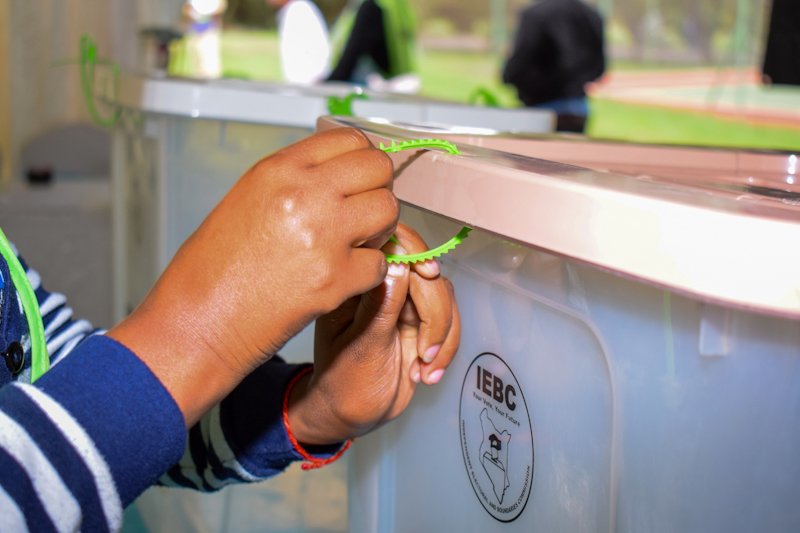
A Bill seeking to give the Independent Electoral and Boundaries Commission (IEBC) ownership of election technology and direct access to election result servers has passed the debate stage in the National Assembly.
The Elections (Amendment) Bill, 2024, which progressed through the House last week, proposes that election servers be hosted in Kenya and made accessible for scrutiny by candidates, courts and other persons authorised under the law.

It would also require the IEBC to provide access to information on election technology without charging a fee where the requested material is supplied electronically.
Any scrutiny would be subject to the Constitution, the Access to Information Act, the Elections Act, the Data Protection Act and the IEBC Act.
Clause 23 proposes an amendment to Section 44(4) of the Elections Act to give the IEBC ownership of intellectual property rights in election technology and access to the relevant servers.
“In procuring the election technology, the commission shall ensure that intellectual property rights to the technology vest in the commission,” the proposed provision states.
The changes will only take effect if Parliament passes the Bill and it is signed into law in its current form.
The Bill, sponsored by Senate Majority Leader Aaron Cheruiyot (Kericho) and Minority Leader Stewart Madzayo, is based on recommendations contained in the National Dialogue Committee (Nadco) report. The report was adopted by the Senate on February 21, 2024, and by the National Assembly the following day.
If enacted, companies contracted to provide the Kenya Integrated Elections Management System (KIEMS) technology would have to transfer ownership of the technology’s intellectual property rights to the IEBC. “The commission shall ensure that the technology is accessible and available for scrutiny by candidates, courts and such other persons as required under the law,” the Bill states.
The proposed legislation would further require the commission to establish that an election technology supplier, or any of its associates, has not been found guilty of violating procurement laws, committed a crime, breached professional standards or been barred from public procurement in any jurisdiction.
- IEBC dismisses voter smuggling claims ahead of 2027 polls
- IEBC sets deadlines for 2027 election nomination and registration
- IEBC clarifies degree requirement for 2027 candidates
The proposed changes come as election servers are currently hosted outside Kenya, a situation the Bill seeks to address amid concerns about national security, compliance with the law, operational sovereignty and public confidence.
National Assembly Speaker Moses Wetang’ula directed the Justice and Legal Affairs Committee (JLAC) to fast-track consideration of the Bill in a communication to the House on September 29, 2026. The committee is chaired by Tharaka MP Gitonga Murugara.
“The committee is expected to review the proposals and recommend to the House any appropriate amendments for inclusion in the electoral amendment Bill that forms part of the priority business for this part of the session,” Speaker Wetang’ula said.
The proposed transfer of intellectual property rights is intended to give the IEBC greater control over election technology and the management of election results. The move follows previous instances in which technology providers denied the commission access to servers despite court orders.
The Bill forms part of proposed electoral reforms aimed at strengthening the independence of the IEBC in conducting elections and addressing disputes over ownership and access to election technology.
It also proposes a new Section 82A requiring the commission to facilitate access to election information without charging a fee where the information is requested in soft copy. A specific timeline would apply where information is sought as part of scrutiny of votes.
For presidential elections, the IEBC would be required to facilitate access within three days of receiving the request, while requests concerning other elective positions would have to be facilitated within seven days.
The proposed new Section 82A states that “the commission shall ensure access to information including any technology used in elections and shall not charge fees where the information requested is provided in soft copy.”
Where the requested material is sought in hard copy, the commission would be allowed to charge a prescribed fee.
Email your news TIPS to Editor@nairobilawmonthly.com, and to advertise with us, call +254715061658 anytime of the day
