

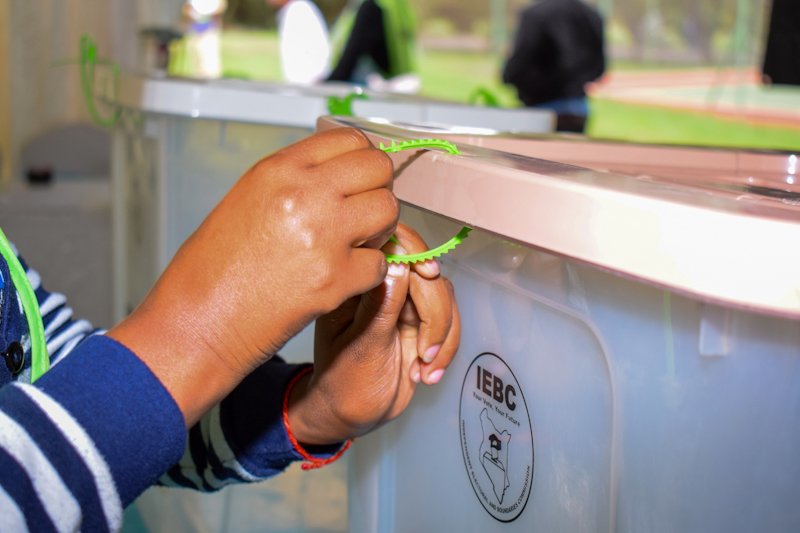
The Independent Electoral and Boundaries Commission (IEBC) has dismissed claims of a scheme to smuggle voters across the Kenya-Uganda border ahead of the 2027 General Election, saying no one has presented any credible evidence to support the allegations.
In a statement issued on Sunday, September 27, 2026, IEBC chairperson Erastus Edung Ethekon described the reports as untrue and warned that unverified claims could mislead the public and weaken confidence in preparations for the election.

“The stories on electoral malpractice or illegality relating to the registration of voters, illegal transfers of voters and alleged registration of foreigners as voters in Kenya and abroad remain unsubstantiated and untrue,” the Commission said. It added that it had received nothing to back the claims.
“To date no entity, organization, group or individual has submitted to the Commission any credible evidence supporting any such allegations of illegality and malpractice,” the IEBC said, calling the reporting “sensationalized and unsubstantiated.”
The statement followed a KTN report previewed on Saturday evening, September 26, which said an investigation had found voter registration materials being moved to Uganda, with the Suam border area of Trans Nzoia County at the centre of the claims. The report also alleged that some Ugandans had been helped to obtain Kenyan identity cards so they could vote.
The Commission responded to the claims, saying it does not issue national identity cards or passports, which fall under other state agencies. “In addition, IEBC does not issue National IDs or Kenyan passports.
These functions fall within the mandate of the relevant State Agencies responsible for identification, citizenship and immigration,” it said. Under Article 88 of the Constitution, it explained, its role is limited to registering eligible Kenyan citizens who hold a National ID or a valid passport and maintaining the Register of Voters.
- IEBC sets deadlines for 2027 election nomination and registration
- Opposition loses bid to scrap IEBC national tallying
- IEBC clarifies degree requirement for 2027 candidates
On the claim that registration equipment had crossed the border, the IEBC said no Kenya Integrated Elections Management System (KIEMS) kit had been misplaced, intercepted or moved to any unauthorised or foreign location. It said the kits work only within authorised electoral settings and can be activated solely by Registration Officers or delegated clerks using unique passwords.
Registration, it said, continues lawfully in all 290 constituencies, at designated and gazetted centres under trained officials. The Commission also noted that Kenyans living abroad, including in Uganda, retain their constitutional right to vote, and said it is extending diaspora registration from 12 countries to 26.
The IEBC pointed to the size of its recent registration exercise as evidence that the register is growing through the normal process. A continuous voter registration exercise that ran until April 9, 2026, added 2,612,725 new voters, alongside 49,502 transfers and 1,066 changes of particulars.
The Commission had 22.1 million registered voters in 2022 and is targeting 28.5 million for 2027. It has said it will work with agencies including the National Registration Bureau and the Immigration Department to clean and validate voter data.
Concerns about registration in counties bordering Uganda have featured in opposition criticism in recent weeks, with Trans Nzoia Governor George Natembeya among those who have repeatedly alleged that people from neighbouring countries are being registered in his county and called for investigations.
Email your news TIPS to Editor@nairobilawmonthly.com, and to advertise with us, call +254715061658 anytime of the day
