

Kenya has confirmed its first case of Ebola, with the patient, a Kenyan citizen who had travelled from the Democratic Republic of Congo (DRC) through Uganda, dying while receiving treatment at Nairobi Hospital.
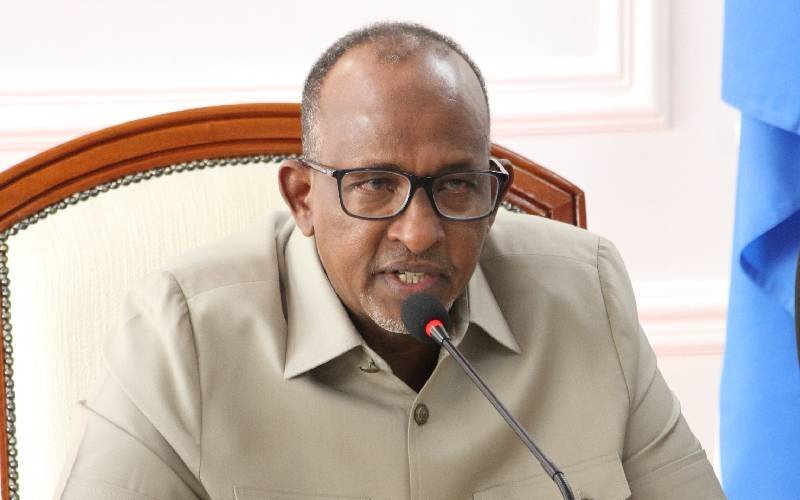
Health Cabinet Secretary Aden Duale confirmed the case on Tuesday, October 6, 2026, saying the patient arrived in Nairobi on Saturday after travelling by road from the DRC to Kampala before boarding a Jambojet flight to Kenya.
The patient, who had been living in the DRC, underwent routine public health screening at Jomo Kenyatta International Airport (JKIA) before being picked up by a relative and taken to Nairobi Hospital.
He was initially isolated in the hospital’s Accident and Emergency unit before being transferred to the East Wing isolation facility. The patient later tested positive for Ebola and died on Monday while undergoing treatment.
Health authorities have so far identified 28 people who came into contact with the deceased, including family members and healthcare workers. The Ministry of Health is also tracing 23 passengers who travelled on the same flight from Uganda. Those identified as contacts will be monitored and kept in isolation for 21 days, with testing to determine whether they have contracted the virus.
The case is the first confirmed Ebola infection recorded in Kenya and comes as the country steps up surveillance following a major outbreak of the Bundibugyo strain in the DRC.
Kenya had intensified its preparedness months before the first case was detected, activating emergency response systems, strengthening laboratory capacity and increasing screening at airports and land border crossings.
In June, the Ministry of Health said more than 71,000 travellers had been screened and 22 Ebola alerts investigated, all of which had tested negative at the time.
The confirmation also revives memories of the controversy surrounding a proposed United States-funded Ebola quarantine facility at Laikipia Air Base in Nanyuki. The facility faced opposition from residents and activists who argued that hosting an Ebola isolation centre posed health and governance concerns.
- Ebola outbreak in DRC tops 1,000 cases, death toll climbs to 254
- High Court issues fresh orders blocking Ebola facilities in Kenya
- WHO calls for global action to contain Ebola outbreak
Protests over the project in June turned violent, with three people ultimately reported dead. The proposed facility was subsequently halted following court intervention, with the Ministry of Health saying construction and site activities had been suspended in compliance with court orders.
Kenya’s first case follows the spread of the outbreak beyond the DRC. Uganda recorded 20 cases and two deaths before the World Health Organisation declared the country free of Ebola in August.
France also recorded one case linked to the outbreak. Kenya is now the fourth country to record a case in the current outbreak. The DRC outbreak, which was declared in May, is caused by the rare Bundibugyo virus.
By September 23, the WHO had recorded 7,890 confirmed cases and 3,799 deaths in the DRC, with transmission reported across 63 health zones in seven provinces. The agency described it as the largest Ebola disease outbreak ever recorded in the DRC.
WHO says there are currently no approved vaccines or specific treatments for Bundibugyo virus disease, although vaccine and treatment trials are under way in the DRC. The response relies on rapid identification and isolation of cases, contact tracing, appropriate patient care, safe burials and strengthened surveillance to limit transmission.
Ebola spreads primarily through direct contact with the bodily fluids of an infected person, including after death. Symptoms can include fever, vomiting, diarrhoea and, in severe cases, internal and external bleeding.
Kenyan health authorities have placed the country on high alert as contact tracing and surveillance continue to establish whether the virus has spread to anyone who came into contact with the deceased.
Email your news TIPS to Editor@nairobilawmonthly.com, and to advertise with us, call +254715061658 anytime of the day
