

 By Martin Minns
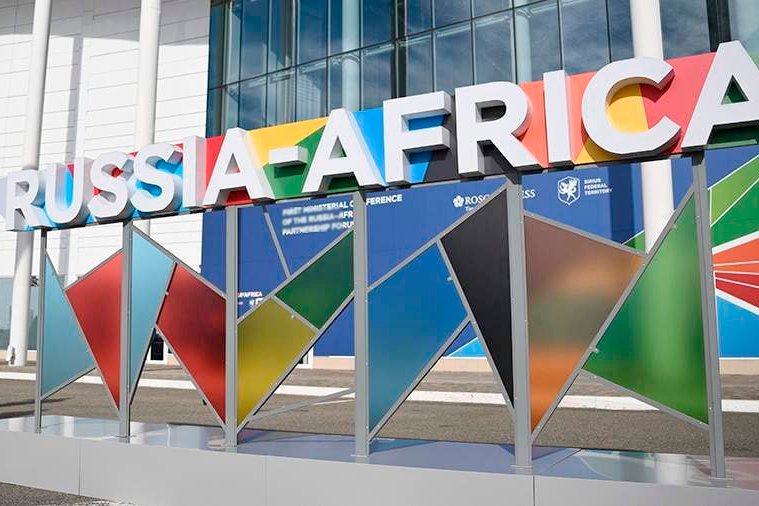
The third Russia–Africa Summit, originally scheduled to take place in Libya, finally took place in Moscow on October 28 and 29 what was meant to be a showcase Russia’s growing influence across the continent of Africa.
According to the Kremlin, 22 African heads of State were in attendance, more than the 17 that attended the summit’s second edition in St Petersburg in 2023, but markedly down from the 43 that turned up for the inaugural summit in Sochi in 2019.
The Kremlin said the lower turnout was the result of ‘outrageous’ Western pressure. To be fair, the Russians may have a point. Whether the pressure was ‘outrageous’ or not is another matter.
Quibbling over the number of attendees at the summit is missing the point. Two questions emerge; what has Africa gained from the costly diplomatic gatherings? And did the summit provide a measure of sustainable and durable partnerships between Russia and African States?
Russian engagement with Africa has grown over recent years but its economic delivery remains limited and the outcomes of its security role have been patchy. Russia’s interest in Africa, of course, arises from its own priorities — countering Western influence, building ‘non-aligned’ partnerships, securing access to minerals, and expanding defence sales.
The prospects for Russia across this interest range, however, are not favourable. Russia’s economic contribution to Africa remains miniscule compared with the US, Europe and China, with Russian investment accounting for less than one per cent of direct investment into Africa.
Russian global arms exports fell 64 per cent from 2021 to 2025, ranking Russia third, behind the US and China, in major arms supply to Africa over that period. Meanwhile, Russia’s increased security role in the Sahel, for example, has not resulted in providing reliable security guarantees. Annual deaths linked to violent extremism in the Sahel increased by an average of 927 in the 2016–2019 period to an average of 10,470 in 2022–2025.
Russia faces the problem of sustaining its security commitments in Africa while at the same time its resources are being stretched by the war in Ukraine, which has resulted in more than 1.2 million casualties.
Russia’s war with Ukraine is also proving to be a public relations disaster, particularly its ‘recruitment’ of Africans to fight in that drawn out conflict.
A survey across 38 African countries in 2024–2025 conducted by Afrobarometer, an independent, non-partisan, pan-African research network found that the perception of Russian influence was far less positive than that of the US, the EU and China, with 72 per cent of those who had heard of the Ukraine war saying they wanted their country to remain neutral in it.
- China’s action in German plane’s incident raises important military questions for Africa
- Why disinformation poses grave threat to African States
A recent investigation cited by African media outlets “The Death Contract: How Russia Recruits Africans to Fight and Die in Ukraine,” Journalists for Justice, documented 3,034 Africans from 40 countries who were recruited into Russia’s armed forces, often through deception and promised civilian jobs. The report was released by the Hague-based group in October.
A deal struck between President Vladimir Putin and Kenya’s President William Ruto at the Russia-Africa summit, agreeing to designate Kenya as a ‘non-source country’ for the recruitment into the Russian military, is to be welcomed as long as it can be implemented and prevents recruiters from exploiting alternative channels for their trade.
Meanwhile, Bloomberg the global news agency, recently reported that Moscow has been widening its recruitment drive in other African countries including Zimbabwe, Burundi and Sierra Leone.
Africa’s engagement with Russia has been described as ‘diversified non-alignment’, with African governments viewing Moscow as one of several partners with whom they can pursue their interests in terms of trade, security and greater representation in international forums.
With Russia’s capacity in terms of trade, arms supply and diplomatic clout restricted and inhibited by the war in Ukraine, which continues to drain resources both material and political, the question is whether Moscow can convert political declarations and security interests into concrete, deliverable commitments to African governments.
Ultimately, Russia’s standing as a partner will depend on its ability to provide sustained economic benefits, reliable security partnerships and tangible outcomes for African countries. A summit in Moscow gives some idea as to the scale of Russia’s ambitions, it’s what follows that will reveal how far it can realistically meet them.
Martin Minns is Co-Executive Producer of the Pan-Africa podcast Panel 54.
Email your news TIPS to Editor@nairobilawmonthly.com, and to advertise with us, call +254715061658 anytime of the day
