

By Getulio Moreira
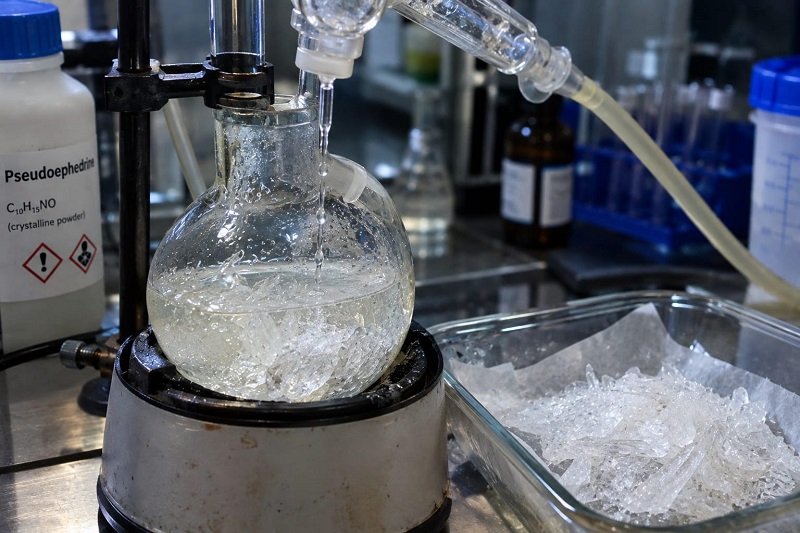
 The densely forested interior and vast coastlines of West Africa have emerged as a primary global frontier in the production and movement of methamphetamine. Or, as it is commonly known, Crystal Meth.
Production and usage of the highly destructive drug has spiked in West Africa in recent years. As a result, governments, lawmakers and security organisations are grappling with new ways to disrupt its supply lines.
Importantly, recent large busts in Nigeria have highlighted the growing role that Mexican meth ‘cooks’ play in the production of the drug. These experts are provided and sent to West Africa by Mexican drug cartels. Cartels have long had a presence in Africa, but it is the size and scale of the issue currently that is underlining the importance West Africa plays as a node in their global operations.
Ghanaian analyst and security expert Fidel Owusu highlighted the depth of the problem, explaining, “whenever you see an intercept of a kilo of a certain drug, about four kilos have gone through the system.” This is a problem many States in the region are underprepared for.
For West African States, the rise in the trafficking and usage of crystal meth raises many issues. Firstly, cartels are targeting West African countries because some of them have weak State institutions. This means preventing drug trafficking and prosecuting those who are caught is a struggle for regional governments.
Moreover, weak institutions and their civil servants are highly vulnerable to the huge cash incentives cartels offer to look the other way or approve logistical documentation and permits. Once compromised, it is difficult and laborious to cleanse an organisation or an individual of the taint of corruption.
Secondly, with a vast and growing young population, the youth of West Africa, and of the continent as a whole, represent a valuable potential market for cartels. Hooking Africa’s youth on such an addictive drug would create a public health catastrophe and would lead to significant security and safety issues in urban settlements. These catastrophes would not be limited to discrete areas, but would expand beyond borders and overlap with other, existing security issues.
A third concern is the possible willingness of the cartels to use existing terrorist and insurgent networks to move their product into and around Africa. Using these networks is a lucrative avenue for both cartels and terrorist organisations and has been happening for decades. Cartels can leverage the existing regional smuggling networks of terrorist groups to transport drugs, and terrorist groups can benefit from a significant opportunity to raise funds to support their expanding operations.
For example, this was seen with the smuggling of cigarettes around the Sahel by Al-Qaeda in the Islamic Maghreb (AQIM). Currently, Jama’at Nusrat al-Islam wal-Muslimin (JNIM, an al-Qaeda affiliate) uses extortion of traders and racketeering of smuggled goods to generate income. A significant collaboration between these two types of criminal enterprises would deepen the many security challenges faced in West Africa.
Speaking on a Panel54 podcast, Owusu cited two core methods to combat the spread of crystal meth. Firstly, wider and deeper intelligence sharing between African nations, especially those that share borders, would improve the chances of intercepting the drug and its primary smugglers.
The close cooperation of intelligence and security agencies will be critical if West Africa is to stand a chance of resisting the surge of crystal meth appearing in the region. The death of Islamic State leader Abu-Bilal Al-Minuki in May 2026, the result of collaboration between US and Nigerian military intelligence, demonstrates what can be achieved when sharing intelligence is done effectively.
Owusu also cited the importance of the naval power of partners. Collaborating with those international partners who can bring powerful navies to bear is a vital method to disrupt the maritime channels that enable the transport of the drug from Latin America to the shores of West Africa.
The US, the UK, French and Scandinavian navies regularly patrol Africa’s Atlantic coast, securing oil operations, partnering with local navies, and protecting shipping lanes. West African countries should leverage the navies of these nations on the basis that a West Africa and a Sahel weakened by drugs is a direct security threat to Western Europe, through migration and narcotics trafficking. Stopping the supply of crystal meth on the West African coastline would be mutually beneficial.
As the nations on this new frontier defending Africa against a wave of crystal meth decide how best to resist it, the world will be watching. If action is taken too late, is too insignificant, or is not joined up across the region, some countries in West Africa will risk becoming African narco-states. With the right cooperation between African countries and alongside the naval power of international partners, Africa stands a chance against the financial power of the cartels. The problem of crystal meth has arrived in Africa; it must be resisted through every avenue.
The writer is a researcher for Panel 54, a Pan-Africa podcast based in Nairobi.
Email your news TIPS to Editor@nairobilawmonthly.com, and to advertise with us, call +254715061658 anytime of the day
