

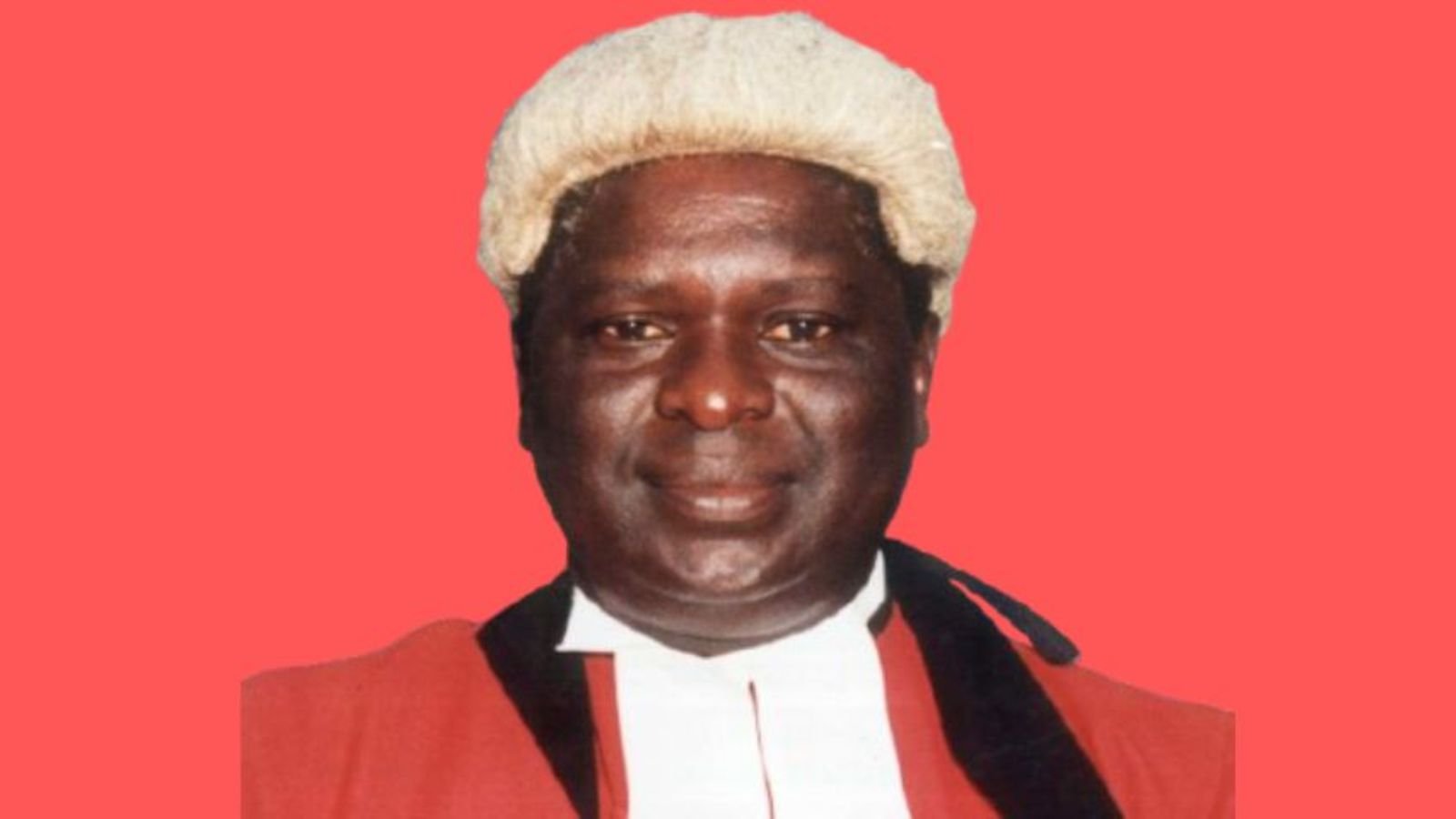
Retired High Court judge Justice Godfrey Omondi Tunya, who died after a prolonged illness on Sunday night at a Nairobi hospital, leaves behind one of the most contested legacies in Kenya’s judicial history.
While the Judiciary has remembered him as a distinguished judicial officer who faithfully served the country, many former political detainees, lawyers and pro-democracy activists recall him as a magistrate whose court became synonymous with some of the most controversial political prosecutions during President Daniel arap Moi’s administration.
Chief Justice Martha Koome led tributes following his death, describing him as a committed judicial officer whose work contributed to Kenya’s legal system.
“Justice Tunya served the people of Kenya with diligence, integrity and unwavering commitment to justice. His contribution to the growth of our jurisprudence and the strengthening of the rule of law will remain part of the Judiciary’s enduring legacy,” she said.
She added that he would be remembered as “a distinguished judicial officer whose service reflected fidelity to the Constitution and the law.”
However, beyond the official tributes, Justice Tunya’s name remains closely associated with an era when the courts were widely accused of reinforcing political repression during Kenya’s one-party rule.
Born in South Nyanza in 1949, he rose through the magistracy before joining the High Court. His judicial career coincided with the late 1980s and early 1990s, when critics of the government frequently faced charges ranging from sedition and unlawful assembly to possession of prohibited publications.
Human rights organisations, former detainees and lawyers have long argued that many of those prosecutions followed illegal arrests, prolonged detention and allegations of torture before suspects appeared in court.
According to accounts documented by lawyers and rights campaigners, many accused persons were presented before Justice Tunya after emerging from detention facilities, where they alleged they had been tortured or forced to confess. They say the courts often accepted guilty pleas without fully examining claims that the confessions had been obtained through coercion.
- High Court Judge David Majanja dies suddenly in Nairobi
- Magistrate Monica Kivuti dies after courtroom gun attack
- Mohammed Ibrahim: Jurist who shaped Kenya’s legal landscape
During that period, Amnesty International repeatedly criticised Kenya’s handling of political prosecutions and raised concerns over sedition trials. The organisation mentioned Justice Tunya alongside senior State officials while calling for an end to the criminalisation of peaceful political expression.
One of the cases that attracted widespread attention involved Reverend Lawford Ndege Imunde, who was jailed in 1990 after being convicted of possessing a private diary containing comments considered seditious. Although the writings had not been published or shared publicly, the court found him guilty. Rights organisations later argued that the case demonstrated how even private opinions could be criminalised during the period.
Justice Tunya also handled proceedings involving politicians George Anyona and Ngotho Kariuki, academic Edward Oyugi and journalist Njeru Gathangu, who were accused of possessing publications linked to the proposed Kenya Social Congress political movement. During the proceedings, the accused described alleged torture while in custody and sought constitutional intervention, but their application did not succeed.
Another prominent case involved lawyer and Nairobi Law Monthly editor Gitobu Imanyara, who was charged with publishing a seditious publication in 1991 after his magazine questioned ethnic imbalance in public institutions and carried material linked to the emerging opposition movement. Justice Tunya denied him bail despite complaints that he had been arrested unlawfully, denied access to his lawyers and family, and produced in court outside the legally prescribed period.
His court also handled cases connected to the outlawed Mwakenya movement, where students, academics, lawyers and government critics faced charges related to prohibited publications. Former detainees who later sued the State for torture have frequently cited that period as one in which allegations of abuse received little judicial scrutiny.
Among those who appeared before him was Koigi wa Wamwere after his return from exile in Uganda. During preliminary proceedings in the treason case, Justice Tunya declined to order investigations into allegations that Koigi had been tortured, maintaining that such issues could only be addressed by the High Court. The High Court later indicated that the complaints should first have been handled by the lower court.
His conduct inside the courtroom also attracted criticism from sections of the legal profession.
Lawyers frequently cited his handling of a case involving activist Beatrice Nduta, where a disagreement with senior advocate Paul Muite escalated after the magistrate reportedly refused to hear submissions before leaving the courtroom. The matter was subsequently taken to the High Court, where Nduta was granted bail. The incident became one of several confrontations between lawyers pressing for judicial independence and members of the Bench perceived to be aligned with executive authority.
Justice Tunya’s transfer to Mombasa in 1992 was also met with opposition from some Coast-based lawyers, who argued that his handling of sedition and public order cases had made him a symbol of the Judiciary’s role during the country’s most restrictive political period.
Although his name became closely associated with politically sensitive criminal trials, his later years on the High Court bench saw him preside over a broader range of matters, including election petitions, commercial disputes, constitutional questions and defamation suits.
Among his notable civil decisions was a defamation case involving The Standard newspaper, in which he awarded substantial damages to the plaintiffs. The ruling later became one of several decisions cited in discussions surrounding large libel awards and their implications for Press freedom.
Justice Tunya’s judicial career ended in 2003 during the anti-corruption exercise popularly known as the “radical surgery”, which was led by Justice Aaron Ringera. The initiative sought to restore confidence in the Judiciary by investigating allegations of corruption and misconduct against judicial officers. Rather than remain in office throughout the process, Justice Tunya left the Judiciary as the purge unfolded.
His departure marked the end of a judicial career that spanned Kenya’s transition from one-party rule to constitutional democracy.
Yet even in death, debate over his legacy remains unresolved. While the Judiciary has celebrated his contribution to the administration of justice, critics continue to associate his courtroom with an era in which political prosecutions, denied bail applications and allegations of torture defined the experience of many government opponents.
For supporters, he was a career judicial officer who rose through the ranks and served the courts for decades. For many former detainees, lawyers and pro-democracy activists, however, Justice Tunya remains a lasting reminder of one of the darkest chapters in Kenya’s judicial history.
Email your news TIPS to Editor@nairobilawmonthly.com, and to advertise with us, call +254715061658 anytime of the day
