

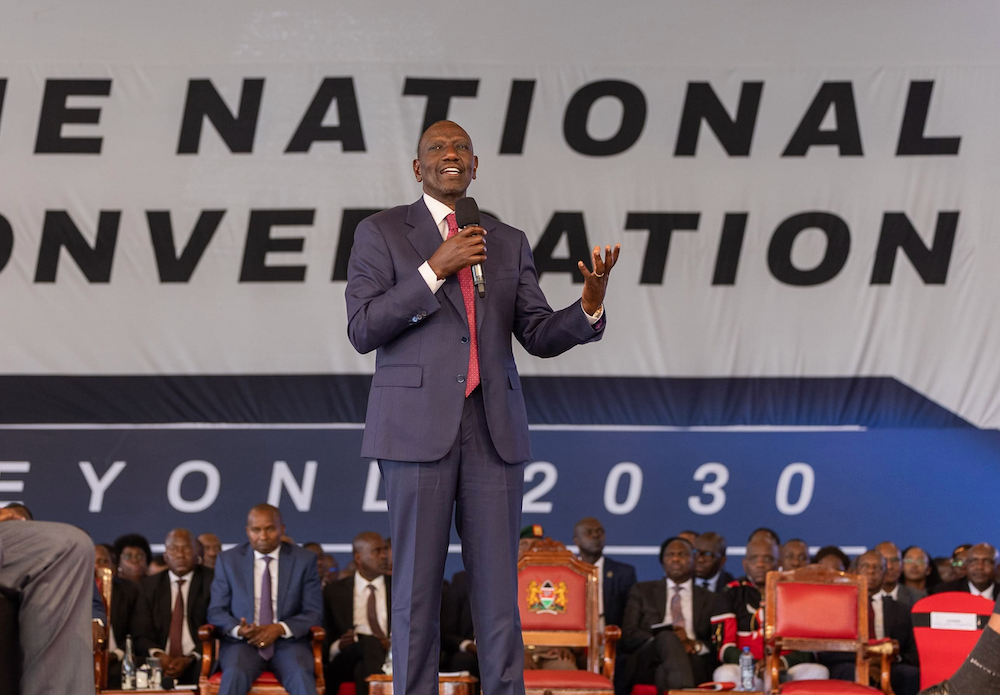
President William Ruto has launched the process of drawing up Kenya’s next long-term development blueprint, which will replace Vision 2030 with a plan stretching to 2060.
According to the president, the new blueprint will take into account changes that have emerged since Vision 2030 was launched in 2008, including rapid advances in technology and artificial intelligence, as well as the growing impact of climate change.
“We are having this conversation now because, number one, Vision 2030 will come to an end. Number two, the world has changed, with technology, AI and climate change reshaping our reality,” Dr Ruto said in Nairobi on Wednesday.
The president noted that Vision 2030 was drawn up before the 2010 Constitution, which brought a new system of governance, planning and public participation. The next blueprint, he said, will therefore be developed under a very different constitutional and economic setting.
Dr Ruto expects the plan to stretch well beyond his administration and future political contests. He called on Kenyans to say what kind of country they want to build over the next 30 years, while also inviting political leaders, including those in the opposition, to contribute ideas.
Treasury Cabinet Secretary John Mbadi, who attended the launch, said the president had not developed the plan but had only initiated the conversation on developing a vision for the country.
“The vision is not for Ruto; it is 2060. Ruto can only be in power up to 2032, not beyond,” he said.
The proposed blueprint is expected to cover economic transformation, industrialisation, jobs, technology, infrastructure, energy, climate change and human capital.
The process will draw views from citizens, political leaders, experts, institutions, the private sector and other stakeholders across all 47 counties.
Dr Ruto urged Kenyans to learn from Vision 2030, rather than discard the existing blueprint. The existing blueprint, launched in 2008, has provided the broad framework for the country’s development ambitions for nearly two decades.
The President has previously held up Singapore as an example of what sustained investment and economic reforms can achieve, as he pushes the ambition of turning Kenya into a high-income, first-world economy.
The new blueprint is expected to provide a long-term framework for development that can guide successive governments and remain in place beyond individual administrations and political cycles.
Email your news TIPS to Editor@nairobilawmonthly.com, and to advertise with us, call +254715061658 anytime of the day
