

UN Secretary-General António Guterres announced in a statement on Monday that the United Nations Transitional Assistance Mission in Somalia (UNTMIS) will end following a two-year handover process.
This comes after a number of Security Council resolutions and a request by the Federal Government of Somalia for increased control of its political and security affairs.

A ceremony was held in Mogadishu on 26 October, attended by UNTMIS Officer-in-Charge Raisedon Zenenga and Somalia’s Deputy Prime Minister Salah Jama.
Zenenga praised the strength of the Somali people and said he was confident there would be continued collaboration with the United Nations through its other agencies. Jama stated that it was a historic day and that Somalia was assuming more responsibility.
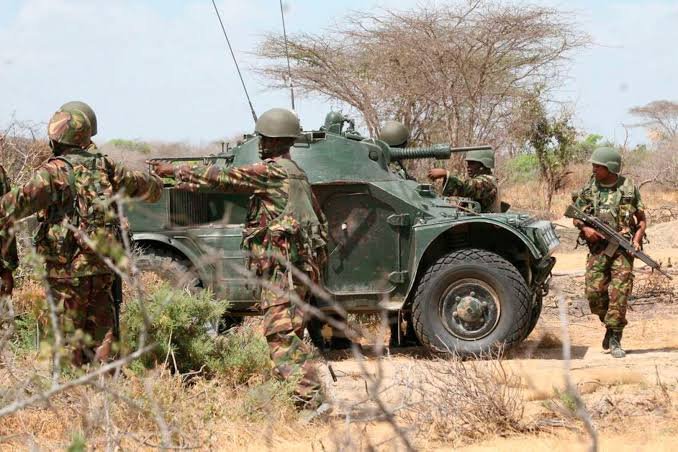
The African Union Support and Stabilization Mission in Somalia (AUSSOM), which includes Kenyan troops, will continue despite the closure of UNTMIS. The AUSSOM mission is currently scheduled to end on 31 December 2026.
Kenya has had a military presence in Somalia since 2011, when it launched Operation Linda Nchi, entering the country. Kenyan forces subsequently joined several African Union missions against Al-Shabaab.
Security in northern Kenya remains a concern. Mandera County has seen numerous attacks by the militant group in recent months. Security forces thwarted an attack by suspected Al-Shabaab militants in Arabia town on 6 September.
However, there have been numerous other attacks, including the deaths of five Special Operations Group officers in late July near Wantey Dam. Other attacks in the area were thwarted, including incidents involving Fino Camp and Arabia village. On 13 July, a military operation resulted in the deaths of 11 suspected militants.
This has complicated long-term plans to reopen the Kenya–Somalia border, which has been closed for over 13 years. Although President William Ruto has previously stated that security concerns are the main obstacle to reopening the border, local leaders and communities in Mandera, Wajir, Garissa and Lamu are calling for increased collaboration between communities and security forces.
Despite the challenges Somalia still faces with Al-Shabaab, Guterres has called for continued international support to ensure that progress is not lost. The United Nations will continue to work in the country through resident agencies focused on humanitarian aid, development and human rights.
Although the closure of UNTMIS means increased responsibility for Somali institutions, Kenyan military forces remain active within the country. The political developments in Mogadishu are far removed from the concerns of border communities, whose residents remain focused on the safety of their roads, villages and way of life.
– By John Murunga
Email your news TIPS to Editor@nairobilawmonthly.com, and to advertise with us, call +254715061658 anytime of the day
