

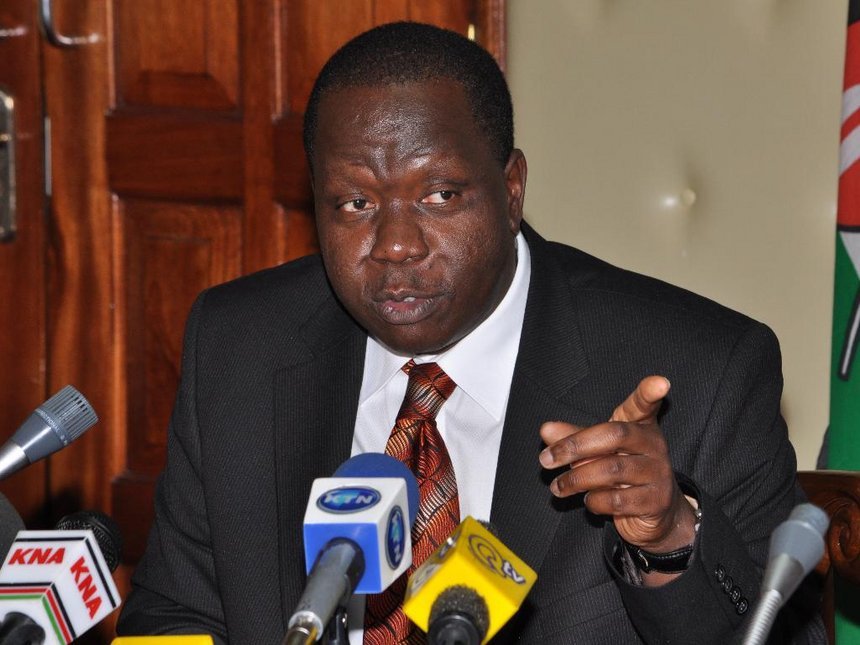
Jubilee Party leader Fred Matiang’i has pledged to remain within the opposition fold and support whoever emerges as its joint presidential candidate for 2027, even if he himself does not secure the ticket, a day after former Deputy President Rigathi Gachagua warned the coalition’s candidate-selection process could end with one of its principals walking away.
Speaking on Sunday, September 27, during a political tour of Narok alongside a number of opposition leaders, Matiang’i said individual ambitions should not be allowed to derail efforts to build a single, broad political movement ahead of the 2027 General Election.
“Even if we do not get that position, what matters is that we stand together,” he said, adding that he had taken an active role in bringing opposition leaders together because the moment called for a united front rather than competing camps.
His remarks came a day after Gachagua, speaking to Kenyans in Dallas, United States, cautioned that the process of agreeing on a single opposition candidate could eventually push one of the coalition’s principals out altogether, drawing a comparison to events that preceded the 2002 General Election. Gachagua did not name the leader he expects to leave the arrangement.
The Democracy for Citizens Party leader has separately said the opposition coalition, which also includes Wiper leader Kalonzo Musyoka, People’s Liberation Party leader Martha Karua, Democratic Party leader Justin Muturi, and DAP-Kenya’s Eugene Wamalwa, will remain intact through to the 2027 vote regardless of what he described as attempts by President William Ruto to divide it.
The competing public positions, Matiang’i stressing cohesion and Gachagua flagging the risk of fracture, point to one of the central unresolved questions facing the opposition as it works out a formula for selecting a single candidate to face Ruto.
The coalition has previously indicated that national interest, rather than party rivalry, would guide its eventual choice, with Muturi telling delegates earlier this year that the grouping was focused on steering the country away from what he called a damaging political and economic path, and Gachagua pledging at the same gathering that the opposition would settle on a candidate capable of winning the public’s trust.
Even as both men publicly affirm their commitment to unity, accounts from within the coalition point to real friction beneath the surface. Gachagua’s camp has previously raised concern over Matiang’i’s engagements with rival political figures, while allies of Matiang’i have accused Gachagua of trying to dominate the coalition’s activities and sideline smaller constituent parties.
Reports from within the grouping have also pointed to disagreement over the method, with Gachagua and Kalonzo’s camp said to favour resolving the candidate question through direct negotiation among the principals, while Matiang’i’s side has pushed for a more structured approach based on opinion polling and demonstrated national reach.
With the question of who will ultimately carry the coalition’s presidential ticket still unresolved, both the public calls for unity and the private tensions reported within the grouping are likely to remain a recurring feature of opposition politics as the parties work toward settling on a single candidate ahead of the 2027 polls.
Email your news TIPS to Editor@nairobilawmonthly.com, and to advertise with us, call +254715061658 anytime of the day
