

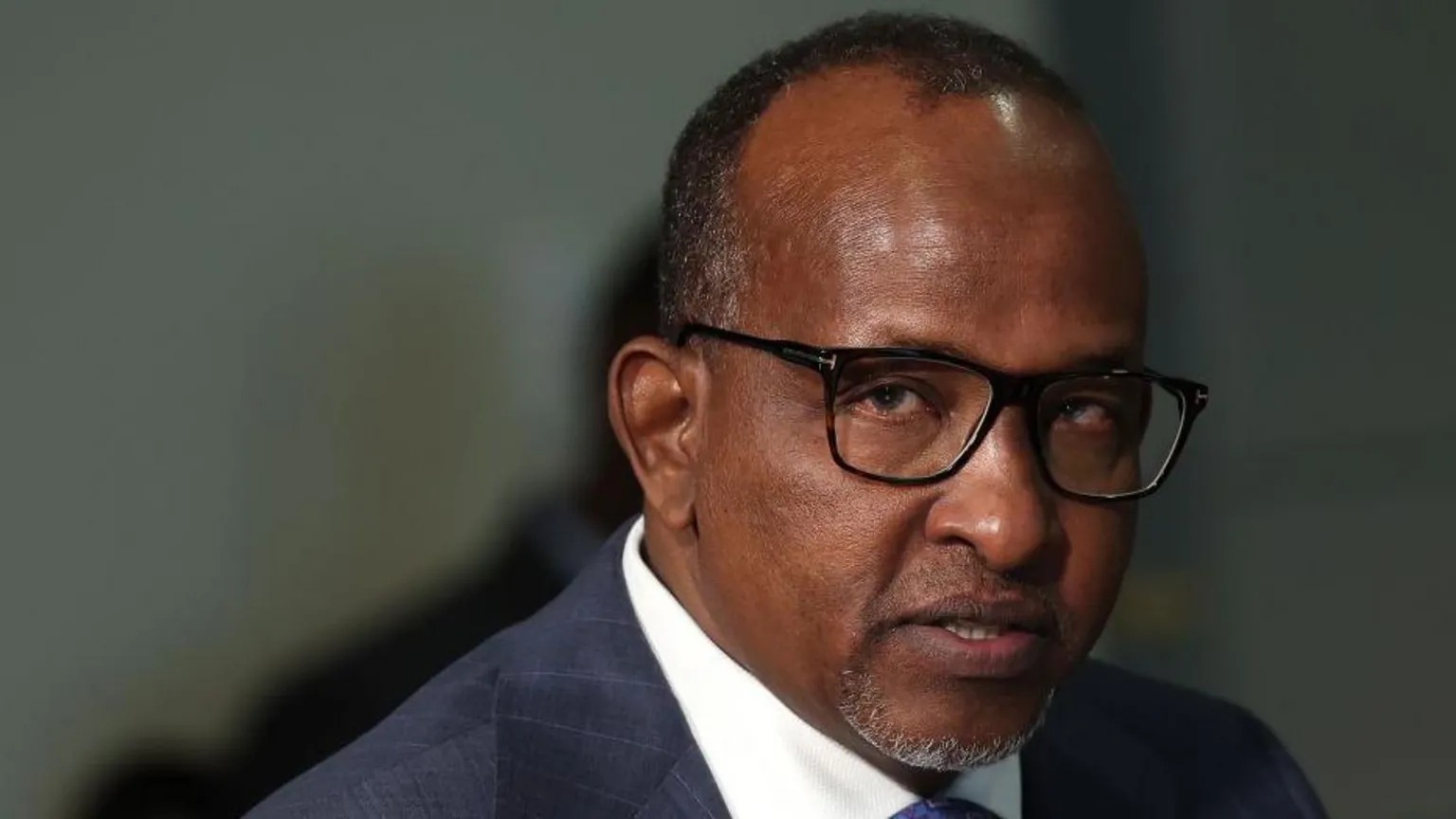
Health Cabinet Secretary Aden Duale has said Kenya does not have an Ebola outbreak, describing the country’s first confirmed case of Bundibugyo virus disease (BDBV) as an imported infection that health authorities are working to contain.
According to the CS, the patient contracted the virus in Eburu in northwestern DRC, where he initially sought medical attention. He later travelled to Beni before making his way by road to Kinshasa.

From Kinshasa, he flew to Kampala on October 1. Duale said the patient bought a ticket to Kenya the following day but did not disclose his illness while travelling.
“When patients are buying a ticket, they declare any illness. This patient never declared when he was boarding the plane in Congo or in Uganda and when he was coming to Kenya, he was under heavy medication and was not detected,” Duale said.
The patient arrived at Jomo Kenyatta International Airport (JKIA), where a relative and a friend picked him up in a Toyota Fielder, registration KDG 699Z, and drove him to Nairobi Hospital. He was first isolated in the hospital’s emergency room before being moved to the East Wing isolation facility. Duale said the facility, which had previously been used during the Covid-19 pandemic, has more than 145 beds.
Medical examinations showed that the patient had a fever, severe fatigue and weakness, muscle pain, painful swallowing, a sore throat and bleeding beneath the skin at an injection site. The symptoms prompted doctors to suspect a viral haemorrhagic fever.
Samples were taken for laboratory testing and subsequently returned positive for Ebola. “He had been sick for a month and his organs were failing. Unfortunately, despite the supportive treatment, the patient died on Monday,” Duale said.
The government announced Kenya’s first confirmed case and death from Bundibugyo virus disease on Tuesday. Duale said authorities have since widened contact-tracing and quarantine measures to establish everyone who may have come into contact with the patient during his journey or after he arrived in Kenya.
Eleven family members and 23 health workers have been placed under quarantine, according to the CS, together with four Jambojet crew members. Authorities are also tracing and quarantining other people who may have interacted with the patient, including Jambojet cleaners and immigration officers who handled his entry into the country.
The government continues to maintain that the case is imported and does not constitute a domestic Ebola outbreak, while urging Kenyans to remain vigilant as health officials intensify surveillance and contact tracing.
Email your news TIPS to Editor@nairobilawmonthly.com, and to advertise with us, call +254715061658 anytime of the day
