

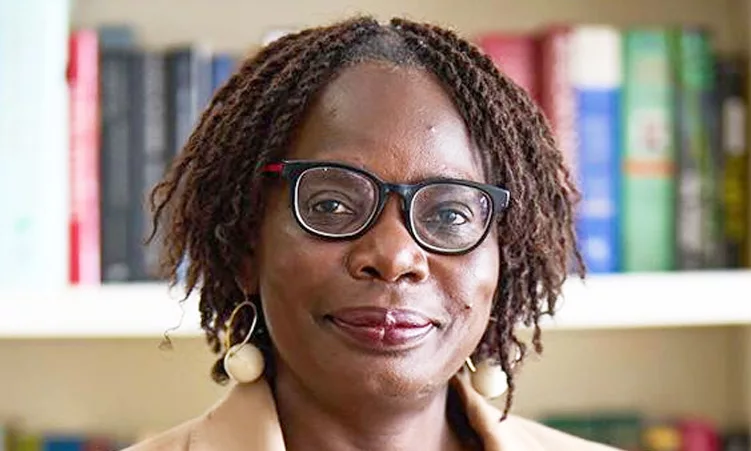
Kenyan jurist Phoebe Okowa has been re-elected as a judge of the International Court of Justice (ICJ) for a full nine-year term, ensuring Kenya remains represented on the United Nations’ highest court until 2036.
Okowa secured the required majorities in the UN General Assembly and Security Council in New York on Tuesday, November 3, 2026, after several rounds of voting in which nine candidates competed for five seats. She received 183 votes in the General Assembly and 13 of the 15 votes in the Security Council.

Okowa was elected alongside Professor Dapo Akande of the United Kingdom, Francois Alabrune of France, Mahmoud Daifallah Hmoud of Jordan and Rena Lee of Singapore. All five will begin their terms on February 6, 2027, and serve until February 5, 2036.
Her path to victory was cleared when Sierra Leone withdrew its candidate, Professor Charles Chernor Jalloh, and threw its support behind her to retain Africa’s seat on the court.
“Today we withdrew Prof. Charles Jalloh’s candidature and backed Judge Okowa to keep Africa’s seat on the Court. Africa first,” Sierra Leone’s Permanent Mission to the UN said.
South Korea and Ecuador also withdrew their candidates after the third round. Foreign Affairs Principal Secretary Korir Sing’oei thanked the three countries, saying their decisions had helped avoid a drawn-out contest.
He also thanked members of the General Assembly and Security Council for backing Okowa, saying her election demonstrated the world’s confidence in her ability to serve the court at a critical time.
President William Ruto congratulated Okowa in a message on X on Wednesday morning, describing her re-election as a major achievement for the country and recognising her contribution to international law.
“Your election is a moment of great pride for Kenya,” he said.
Former Chief Justice David Maraga also congratulated her.
“The resounding victory is an affirmation of the world’s full confidence in one of Kenya’s finest jurists to tackle international justice and the rule of law during this difficult time in global governance,” Maraga said.
Okowa first joined the ICJ in November 2025, when she was elected to complete the term of Somalia’s Judge Abdulqawi Ahmed Yusuf, who had resigned. That term was due to end on February 5, 2027.
Her election made her the first Kenyan to serve on the court since it was established in 1945.
She is Professor of Public International Law at Queen Mary University of London and previously served on the UN International Law Commission, where she was the first African woman member.
She holds a Bachelor of Laws degree from the University of Nairobi, a Bachelor of Civil Law degree and a doctorate from the University of Oxford. She has also served as a member of the Permanent Court of Arbitration at The Hague.
The ICJ, based in The Hague in the Netherlands, is the principal judicial organ of the United Nations. It settles legal disputes between states and gives advisory opinions on legal questions referred to it by authorised UN bodies and agencies. Unlike the International Criminal Court, it does not try individuals.
Email your news TIPS to Editor@nairobilawmonthly.com, and to advertise with us, call +254715061658 anytime of the day
