

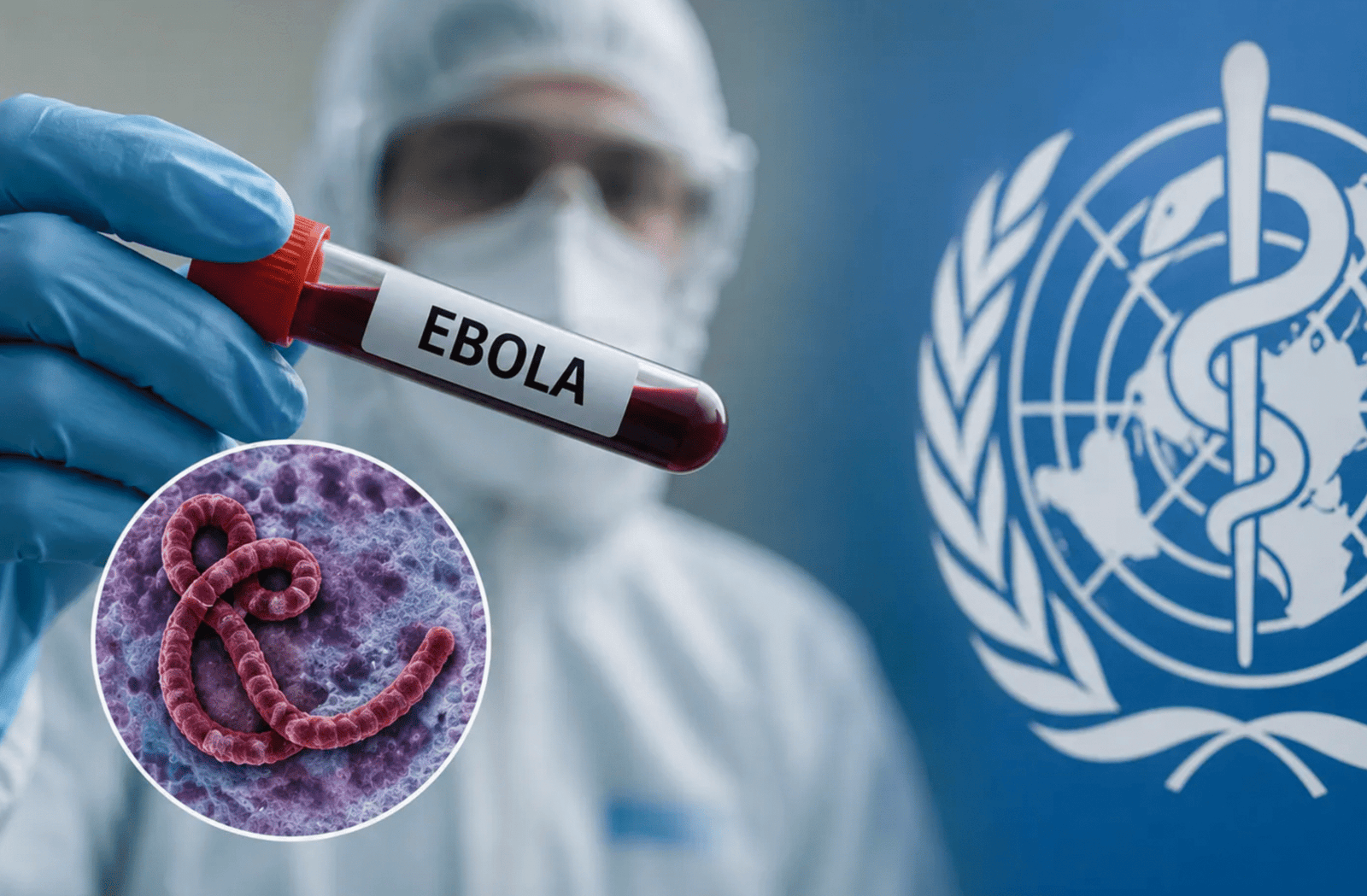
Public outrage has erupted following reports that the United States plans to establish an Ebola quarantine and treatment facility in Kenya for American citizens exposed to the deadly virus, even as the Kenyan government defended the proposal as part of international health cooperation.
Reports published by The New York Times and The Wall Street Journal indicated that the Donald Trump administration intends to set up a quarantine facility in Kenya to monitor and treat Americans exposed to Ebola amid the outbreak in the Democratic Republic of the Congo.

Health Cabinet Secretary Aden Duale confirmed ongoing discussions between Kenya and the US government, saying the country was also strengthening screening and holding facilities at border points.
“The Government of Kenya notes ongoing discussions with the US government and other global partners regarding international collaboration on strengthening preparedness and response mechanisms for Ebola Virus Disease (EVD) and other emerging public health threats. Kenya welcomes partnerships that strengthen global health security and reaffirm our shared commitment to protecting lives through coordinated, science-based action,” said Duale in a press statement.
Speaking at Sir Ali Mosque in Nairobi, the CS added: “We are also putting up holding areas within the borders. In the event we get a case, the country is well prepared for this Ebola situation. We also have a laboratory at the border between Uganda and Kenya and South Sudan and Kenya.”
According to reports, the proposed facility would be staffed by American public health officers deployed to Kenya as part of a joint initiative involving the US Department of State, Department of Defense and Department of Health and Human Services.
Reuters further reported that members of the US Public Health Service Commissioned Corps had already received notices ahead of possible deployment to Kenya to assist with Ebola screening at entry points.
The move has, however, sparked widespread concern among Kenyans, with medical professionals and health unions questioning why Kenya is being considered despite having no confirmed Ebola cases.
Dr Kireki Omanwa, president of the Kenya Obstetrical and Gynaecological Society, criticised the proposal, arguing that Kenya’s health system could be exposed to unnecessary risks.
“Unless there is a motive, unless they want us to get infected. Why should Trump send patients to Kenya?” said Dr Kireki.
He added: “I really do not know why it is happening. When Ebola broke out, Kenyans went to help fight it; some lost their lives. Some foreigners affected were taken to the US, some recovered and others died. What has changed that the US now wants to bring patients to Kenya?”
Dr Kireki argued that while Kenya’s healthcare system may be stronger than several countries in the region, it cannot match the medical capacity of the United States.
“The US has better equipment, better diagnostics and medication, and even access to experimental medicine, which we do not have,” said Kireki.
“Setting up an Ebola centre in Kenya is like a volcano erupting in Congo and then we try to put out the fire in Kenya. Does it make sense? Logically, let them put quarantines in the DRC.”
The Kenya Medical Practitioners, Pharmacists and Dentists Union also opposed the proposed facility, warning that it could expose Kenyans to infection.
“I see no direct benefit in quarantining people for a disease that is not currently a local threat,” said the union’s chairman, Dr Abidan Mwachi.
“We cannot guarantee a completely foolproof system to prevent a possible Ebola leak into the population. Ebola has existed in Central African countries for a long time, and bringing it closer home, in my opinion, amounts to importing the disease. The benefits do not match the risks.”
Nurses and clinical officers similarly questioned the decision, arguing that quarantine centres should instead be established in countries already battling outbreaks, such as Uganda and the Democratic Republic of the Congo.
“Why set up a centre in Kenya? Do we have an outbreak?” asked Kenya National Union of Nurses Secretary General Seth Panyako.
However, some health experts urged calm, insisting that Ebola can be safely managed under strict containment measures.
“Technically, it can be done safely if all measures are in place,” virologist Moses Masika said.
Another virologist, Prof Julius Oyugi, said there was no cause for panic as long as healthcare workers were adequately trained and proper infection control systems were enforced.
“America cannot come and set up such an entity without permission from Kenya, particularly the Ministry of Health. The Government of Kenya has experts who understand diseases like Ebola and the implications of establishing such an institution in Kenya, and such a decision would not be allowed if it were deemed risky,” said Oyugi.
The World Health Organization has warned that the Bundibugyo strain circulating in Uganda and the Democratic Republic of the Congo is spreading rapidly, with more than 900 reported cases and at least 220 suspected deaths. Kenya has not recorded any Ebola infections so far.
Email your news TIPS to Editor@nairobilawmonthly.com, and to advertise with us, call +254715061658 anytime of the day
