

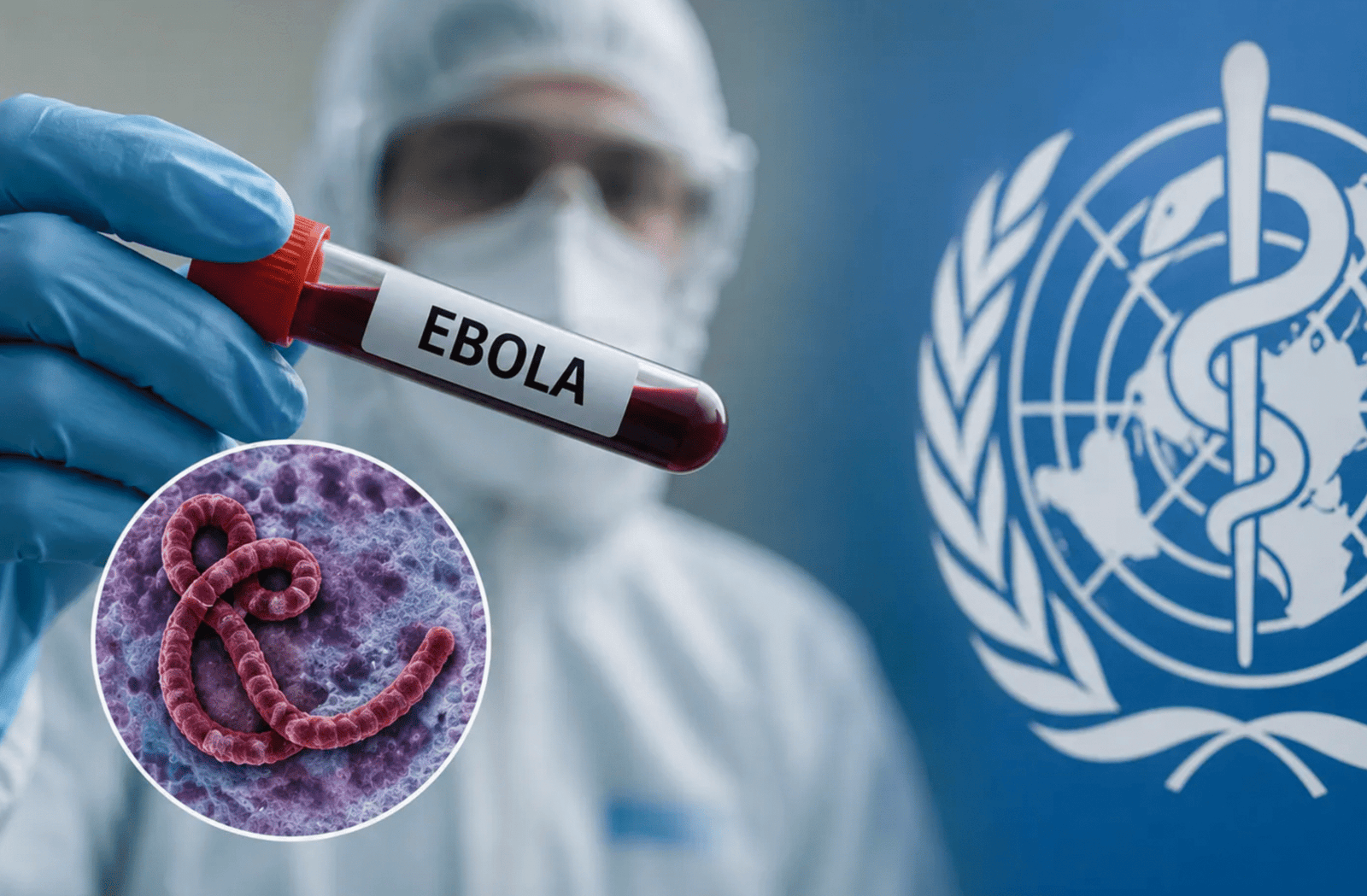
The World Health Organisation (WHO) has advised Kenya against imposing travel or trade restrictions following the country’s first confirmed Ebola case, even as President William Ruto convened the National Security Council Committee to assess the situation.
“WHO advises against any restriction of travel to, or trade with, the affected countries based on the currently available information,” the organisation said.
WHO Director-General Tedros Adhanom Ghebreyesus said the agency was closely monitoring developments and commended Kenya for its swift and transparent handling of the case.
“I thank the Government of Kenya for its transparency and for promptly sharing information about this imported case,” said a WHO official, Janabi, describing Kenya’s response as a model example of the International Health Regulations in action and highlighting the importance of countries sharing information quickly when dealing with potentially dangerous infectious diseases.
WHO said it is continuing to support Kenya, Uganda and the Democratic Republic of Congo (DRC) with contact tracing to ensure everyone who may have had contact with the confirmed case is identified.
Health Cabinet Secretary Aden Duale confirmed Kenya’s first Ebola case on Tuesday, October 6, announcing that a Kenyan citizen who had been living in the DRC for seven years had arrived in Nairobi on Saturday, travelling by road from the DRC into Uganda before boarding a Jambojet flight into the country.
The patient, who had been ill for about a month, was isolated and treated at Nairobi Hospital after developing symptoms consistent with haemorrhagic fever and tested positive for the Bundibugyo strain of the Ebola virus.
He died late Monday while receiving treatment and is expected to be buried within 24 hours in line with recommended public safety protocols. Duale said Kenya had tested 267 samples across five laboratories nationwide since May, with this the only one to return positive.
Authorities have identified 28 contacts linked to the patient, including family members and health workers who treated him, all of whom will remain in isolation for 21 days and be released only once they test negative for the virus.
A further 23 passengers who travelled on the same flight from Uganda are being traced. Ministry of Health Director-General Patrick Amoth confirmed the isolation and testing protocol, while health authorities have placed the country’s border points on high alert and stepped up monitoring for any additional cases.
Kenya becomes the fourth country to record a case in the current outbreak, which was declared in eastern DRC in mid-May and has since become the fastest-growing Ebola outbreak in history. Uganda has recorded 20 cases and France one; Uganda had declared its own outbreak over in late August, meaning there had been no active cases outside the DRC until Kenya’s case emerged.
The underlying DRC outbreak, the country’s 17th, has already killed more than 4,000 people, with confirmed cases surpassing 8,300 across seven provinces, making it the worst Ebola epidemic in the DRC’s history. WHO has warned the epidemic is “far from over” and remains on track to surpass the death toll of the 2014-2016 West Africa outbreak, which killed more than 11,000 people, mostly in Guinea, Liberia and Sierra Leone.
The outbreak is caused by the rare Bundibugyo species of the virus, for which there is no approved vaccine or treatment, though vaccine and treatment trials are currently under way in the DRC’s Ituri province, the epicentre of the outbreak.
WHO’s advisory against travel and trade restrictions echoes guidance issued during past Ebola outbreaks, when health experts similarly cautioned that border closures and lockdowns do little to control the disease’s spread and can instead discourage people from coming forward when they develop symptoms.
Ebola spreads through direct contact with the bodily fluids of infected people, living or dead, and can cause fever, vomiting, diarrhoea and, in severe cases, internal and external bleeding.
With Kenya’s index case now confirmed and the National Security Council Committee actively reviewing the country’s response, health authorities say the coming three weeks, covering the isolation period for all identified contacts, will be critical in determining whether the virus has been contained within the country’s borders.
Email your news TIPS to Editor@nairobilawmonthly.com, and to advertise with us, call +254715061658 anytime of the day
