

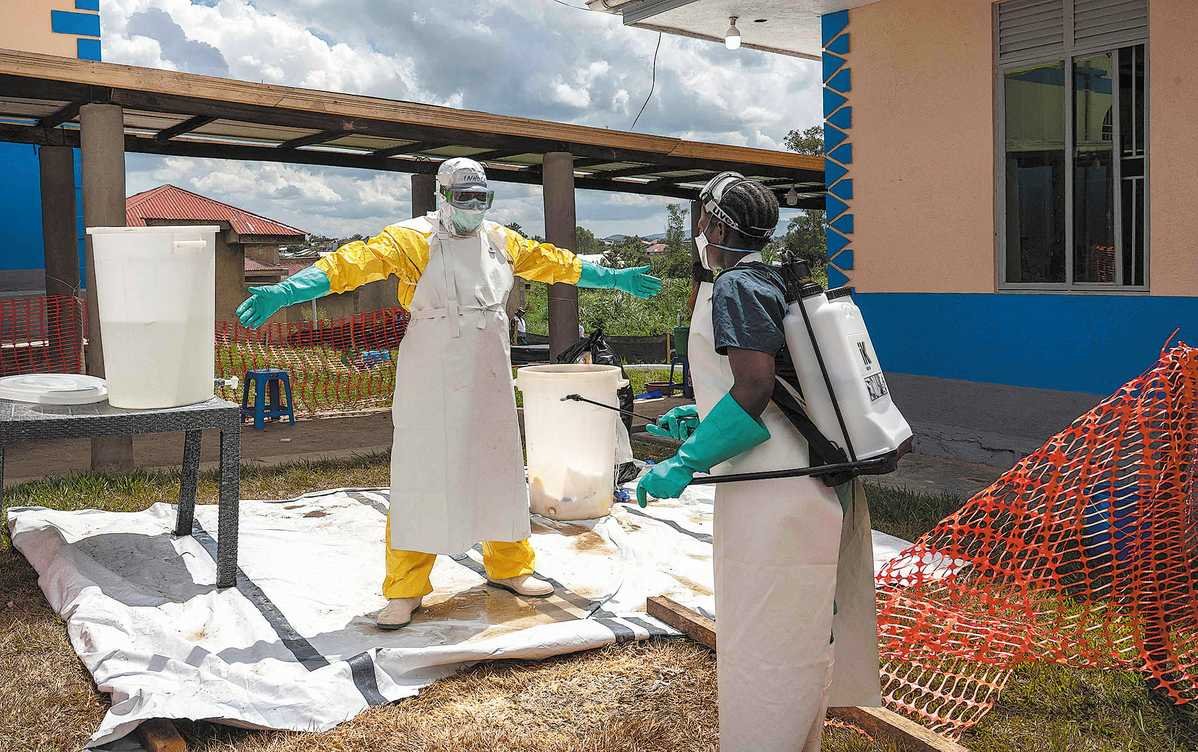
The World Health Organisation (WHO) has warned that the Ebola outbreak in the Democratic Republic of Congo could become the deadliest in history, with the virus spreading faster than efforts to contain it.
More than 2,000 people have died from over 4,300 reported cases in the outbreak, which was officially declared on May 15.
WHO director-general Tedros Adhanom Ghebreyesus said on Wednesday that the outbreak was progressing at a worrying pace. “At its current pace, it’s on track to eclipse the West African Ebola outbreak of 2014 to 2016,” Dr Tedros told reporters. The West African outbreak killed at least 11,000 people and triggered a global push to develop an Ebola vaccine.
In Congo, health officials now believe the virus was already circulating at least three months before the outbreak was officially declared. Some of the early cases were mistaken for malaria or typhoid, giving the disease time to spread.
“We are chasing the virus, the virus is ahead of us,” WHO Africa director Dr Mohamed Janabi said at a news conference in Bunia.
The response has also been hampered by instability in eastern Congo. Health workers are currently reaching only about 30 per cent of cases, according to Dr Janabi.
- Kenya holds 7 US Ebola aid workers in 21-day quarantine
- WHO calls for global action to contain Ebola outbreak
- US Ebola quarantine plan for Kenya sparks nationwide outrage
The outbreak is being driven by the Bundibugyo species of Ebola, a rare strain responsible for only two previously known outbreaks, in 2007 and 2012.
There is currently no approved vaccine or recognised therapeutic drug for the strain.
WHO hopes to bring transmission under control within three months, although officials stress that this would not amount to ending the outbreak.
There is some progress on vaccines. The UK medicines regulator has cleared the first human trials of a Bundibugyo vaccine developed by a University of Oxford team using technology from the Oxford-AstraZeneca Covid-19 vaccine.
Three other groups are working on vaccines, while WHO is sponsoring a clinical trial in Congo to test whether two existing antiviral therapies can improve survival.
Frequently Asked Questions
What is Ebola?
Ebola virus disease is a severe, often fatal illness in humans.
What causes Ebola?
Ebola, Sudan virus and Bundibugyo virus are three species capable of causing large outbreaks. The average case fatality rate is about 50 per cent, although it ranges from 25 to 90 per cent.
Which Ebola strain is causing the current outbreak?
The current outbreak is caused by Bundibugyo virus, which has a case fatality rate of 30 to 50 per cent.
Is there an Ebola outbreak?
Yes, Congo declared the current outbreak on May 15, 2026. More than 4,300 cases and 2,000 deaths have been reported.
Email your news TIPS to Editor@nairobilawmonthly.com, and to advertise with us, call +254715061658 anytime of the day
